NALVEM · Guides
PVC vs plaster wall panels, foam or 3D tiles: the real differences and which to choose
Key points
- PVC, polyurethane foam and self-adhesive panels are light and quick to fit, but they usually have shallow relief and visible joints.
- MDF is an engineered wood: it can be painted and machined, but it is an organic material and is affected by moisture.
- Ceramic 3D tiles are the natural choice for bathrooms and kitchens; self-adhesive tiles are a quick decorative fix with limitations of their own.
- 3D plaster wall panels give real relief, a continuous wall with no visible joints and a mineral material, for dry interiors only.
- Choose according to the use, how long the decoration needs to last and the documentation each manufacturer provides.
You have a wall you want to change, you have looked for ideas and you are faced with hundreds of near-identical photos: waves, diamonds, facets, all in white. Some are PVC, others foam, MDF, ceramic or plaster, and prices range from a few euros to a good deal more. If you are weighing up PVC vs plaster wall panels, or considering 3D tiles, this guide explains what really changes from one material to another once the panel is on the wall, and which one suits your situation.
Why a PVC panel and a plaster panel look the same in a photo but not on the wall
A product photo is usually taken straight on, under controlled light. That way almost any white relief looks good. The differences appear under the real light of your home or business:
- Depth of relief. A thin panel shows the shape, but the shadow it casts is short. With raking light from a window or a spotlight, deeper relief creates longer shadows and a clearer reading of the pattern.
- Joints. A photo of a single piece has no joints. A 10 m² wall has dozens, and how they are treated decides whether you see a continuous wall covering or a grid of tiles.
- Surface finish. Plastic has its own sheen and feel; a painted mineral surface looks like a solid plastered wall.
Compare materials, not photos. If you are not yet familiar with the plaster product, start with the complete guide to 3D plaster wall panels and come back here for the comparison.
3D PVC wall panels: the good points and the limits
3D PVC panels are what comes up most when you search for ‘3D wall panels’. They are plastic sheets formed with a relief, usually white or with finishes that imitate stone, brick or wood.
The good points of PVC
- Light and thin. They are easy to handle and put hardly any load on the wall.
- Inexpensive. They are usually among the cheapest options per square metre.
- Easy to fit. Many are fixed with construction adhesive and some are self-adhesive.
- Water resistance. Plastic does not absorb water like a porous material, although that does not make every panel suitable for a shower: it depends on the product and how it is installed.
The limits of PVC
- Limited relief. As a formed sheet, the depth and crispness of the edges are usually less than in a solid piece.
- Visible joints. The pieces interlock or butt up against each other, and the join usually shows. Filling them so that they disappear is not always possible.
- Combustibility. PVC is an organic material and therefore combustible to a greater or lesser degree. Its reaction to fire classification depends on each product: ask the manufacturer for the documentation.
Polyurethane foam and self-adhesive panels
Polyurethane (PU) foam panels and many self-adhesive panels have the same aims as PVC: low weight and quick fitting. Foam allows thicker shapes and is often used to imitate stone or brick.
- Advantages. Very light, easy to cut and can be fitted without complicated tools. Self-adhesive panels go up in an afternoon.
- Limits. A foam surface is softer and can dent if knocked. The adhesion of a self-adhesive panel depends heavily on the substrate and the environment: on dusty walls, flaky paint or where the temperature changes, it may fail over time.
- Fire. Polyurethane foam is an organic, combustible material. Some products carry treatments or coatings; check their specific classification before using them in commercial premises or circulation areas.
For a rental or a decorative trial they are a reasonable option.
3D MDF and timber panels
3D MDF panels are made by machining a wood-fibre board. There are also solid wood or real-veneer panels, with slats or routed relief.
- Advantages. MDF can be machined precisely and takes lacquer or paint. Natural wood brings warmth and a look quite different from a white surface.
- Limits. MDF and wood are organic, combustible materials. They are affected by moisture: standard MDF can swell if it gets wet. Their relief depends on the board thickness and the routing, and the joints between panels are usually treated as visible lines in the design.
It is worth considering if you want wood or a coloured lacquer; for a continuous white mineral wall, plaster is the better fit.
3D tiles: ceramic and self-adhesive
‘3D tiles’ covers two very different products, and it helps to separate them.
Ceramic 3D tiles
These are ceramic pieces with relief, designed to be laid with tile adhesive and grouted like any other tiling. They are the usual choice in bathrooms and kitchens, because glazed ceramic is made for water and frequent cleaning. Their aesthetic limit is the joint: the grout is part of the system and stays visible, and formats are usually smaller, so the grid shows.
Self-adhesive 3D tiles
These are self-adhesive plastic or gel sheets or pieces that imitate a relief tile. They are quick and cheap, but the relief is very slight, they are organic materials and their resistance to heat, steam and cleaning depends on each product. Near a hob or inside a shower, check carefully what the manufacturer says.
3D plaster wall panels: deep relief, a continuous wall and a mineral material
In the UK and Ireland people search for ‘plaster’, and ‘gypsum’ is common in international searches; the material of NALVEM panels is a fine casting plaster, the finest and purest grade of gypsum plaster. NALVEM designs decorative 3D panels in fibre-reinforced plaster for interior walls. This is what sets them apart from the materials above:
- A solid piece with real relief. Each panel measures 500 × 500 mm and is between 8 and 30 mm thick depending on the design. The relief is part of the piece, with well-defined edges, facets and curves.
- A continuous wall. The joints between panels are filled with plaster or fine gypsum filler and sanded. The whole surface is then primed and painted, so the wall reads as a single covering. The channels, steps and edges that belong to each design are kept.
- Mineral finish. They will be supplied in matt white, with a fine mineral texture, ready to prime and paint on site in the colour of your choice.
- Mineral material. NALVEM’s formulation is being defined with class A1 as its target; until this is documented, we do not declare a class for the product. Paint applied on site is an additional coating. We explain it in the guide to Euroclass A1.
They also have limits, and it is worth knowing them before you choose:
- Dry interiors only. They are not suitable for exteriors, bathrooms, showers or areas with direct water or constant humidity.
- More weight. The reference weight is about 4 to 6 kg per piece depending on the design. It is calculated, not weighed. With 4 panels per m², that is roughly 16 to 24 kg per m², so the substrate must be sound.
- More technical installation. They are bonded with a gypsum- or plaster-based adhesive and the joints are filled. A professional with experience in plaster, gypsum or tiling is recommended. It is explained step by step in the guide to installing 3D plaster wall panels.
- Not structural. Shelves and furniture must not be hung from the panel; they must stand on the floor or be fixed to an independent support.
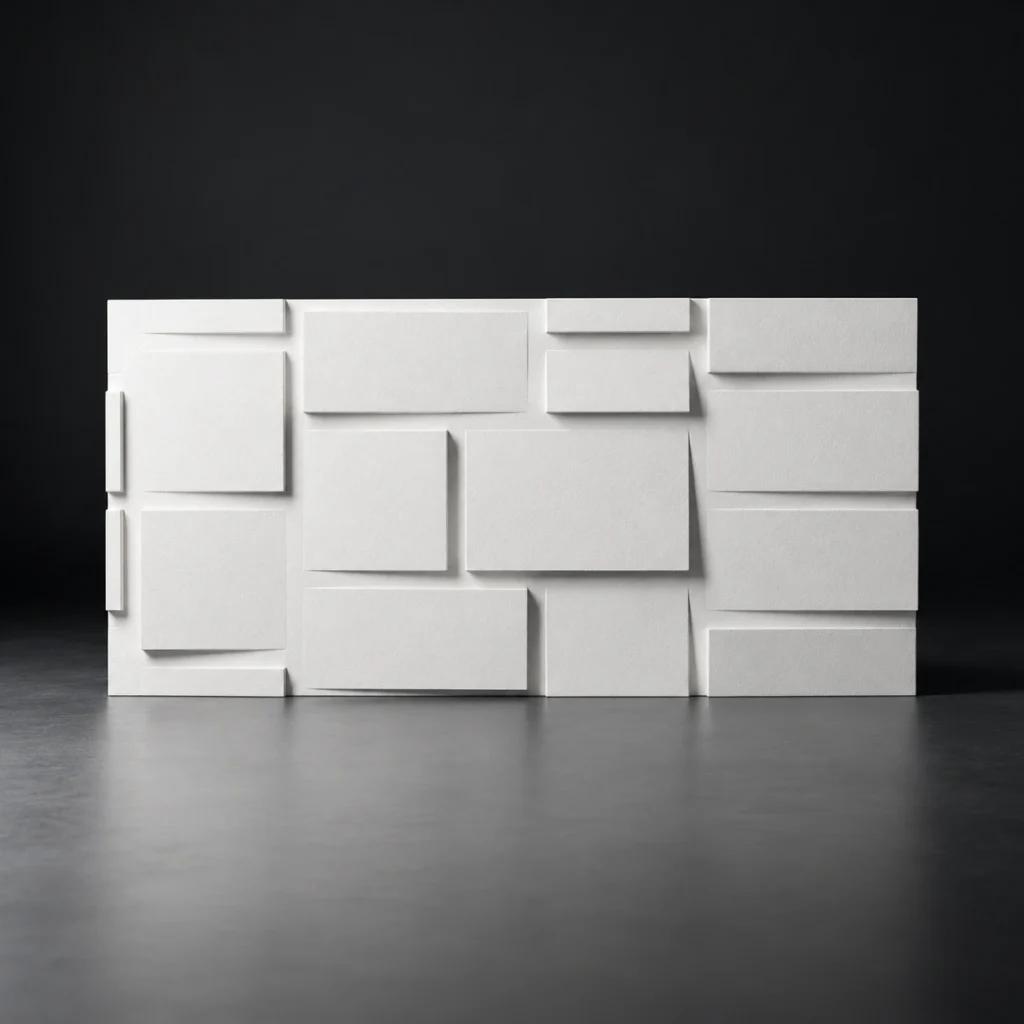
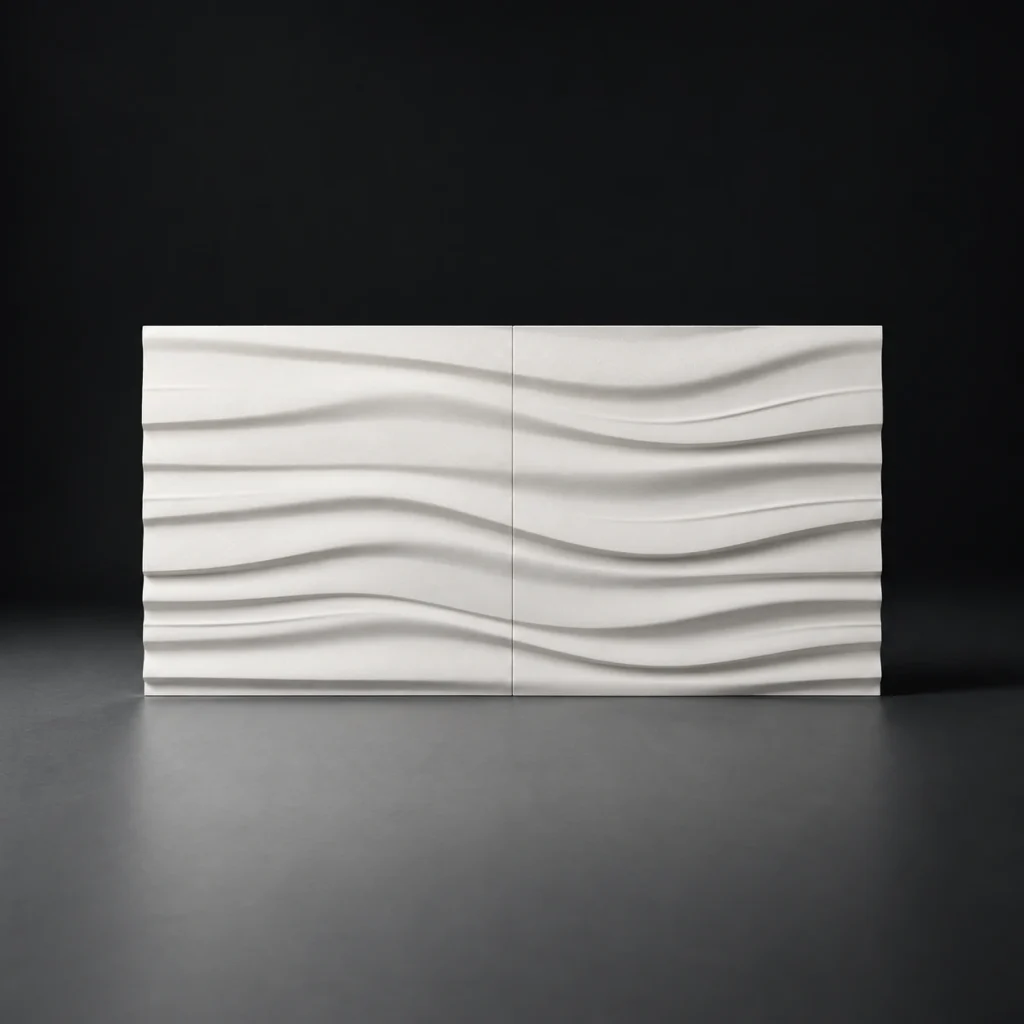
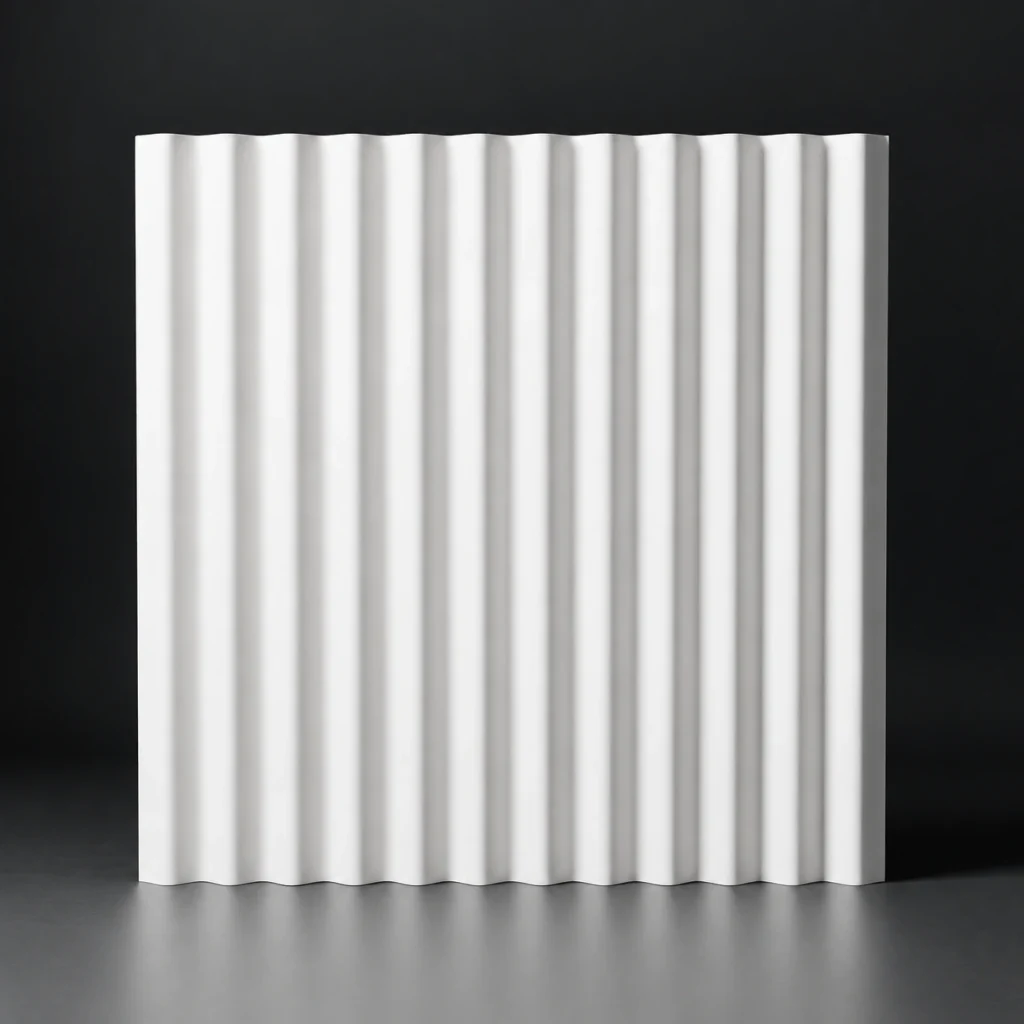
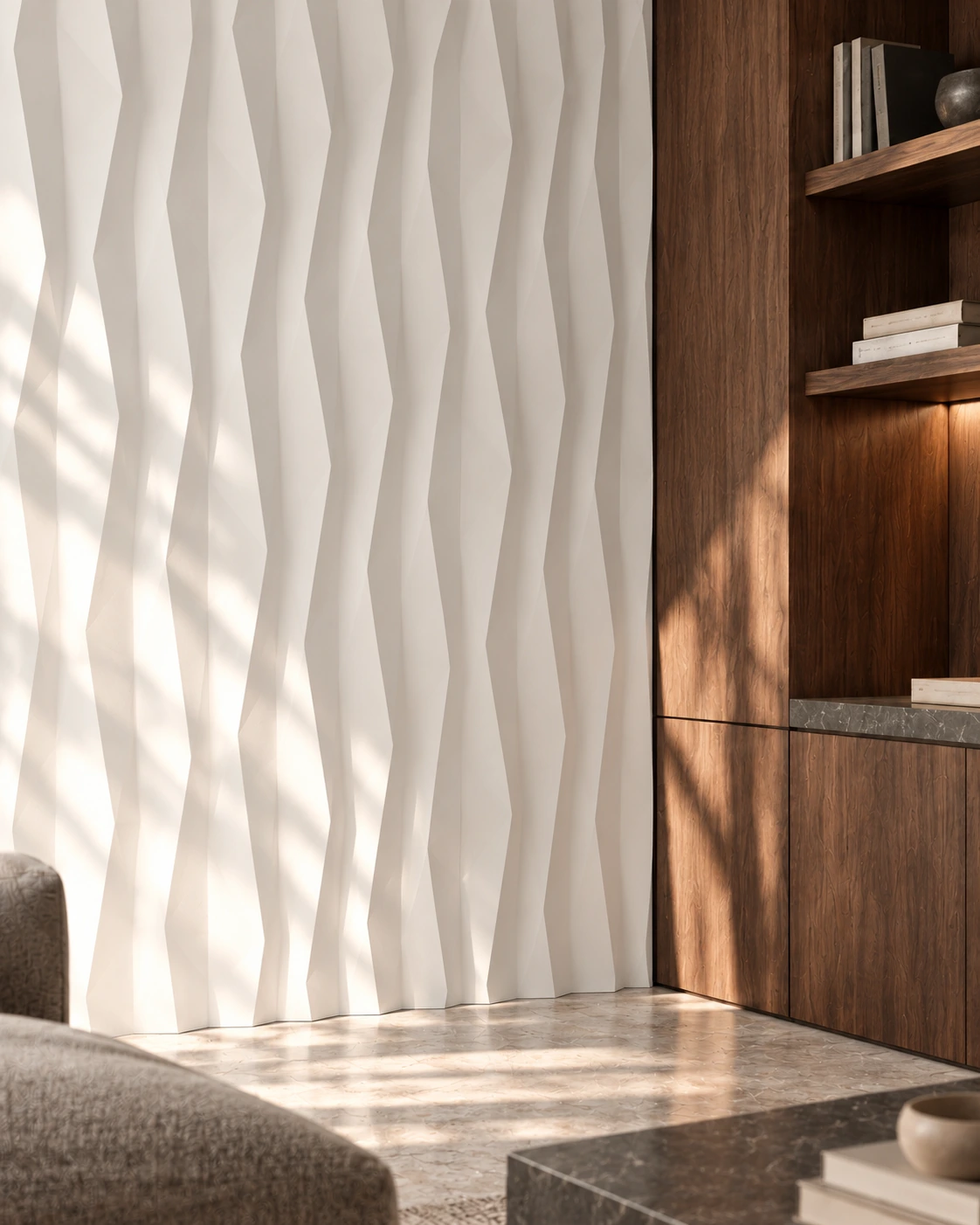
To see how the result changes with the pattern, compare a linear design such as VELIN, with four faceted vertical folds, with a geometric grid such as TESSA, made of 100 squares of 50 mm, or with the horizontal bands of varying width of FLUVA.
Full comparison table: PVC vs plaster wall panels, foam, MDF and tiles
The table sums up the usual differences between materials. For PVC, foam, MDF and tiles, the information is general: each product can vary, so always check its documentation.
| Material | Relief and finish | Joints | Weight | Paint | Reaction to fire | Suitable use |
|---|---|---|---|---|---|---|
| Plaster (fibre-reinforced, NALVEM) | Solid piece 8 to 30 mm thick depending on the design; matt mineral finish | Filled and sanded: continuous wall | About 4–6 kg per piece (calculated) | Yes, after priming, with an interior paint suitable for plaster | Target: A1; documentation in preparation | Dry interiors: homes, hotels, restaurants, shops |
| PVC | Formed sheet; usually shallower relief; plastic look | Usually visible | Very light | Depends on the product; check its instructions | Organic, combustible material; check its classification | Quick makeovers, rentals, temporary decoration |
| Polyurethane foam | Thick but light; softer surface | Usually visible | Very light | Depends on the product | Organic, combustible material; check its classification | Faux stone or brick, quick decoration |
| MDF and timber | Routed relief; lacquer or exposed wood | Usually left visible as part of the design | Medium | Yes, with suitable lacquer or paint | Organic, combustible material; check its classification | Dry interiors, when you want wood or colour |
| 3D tile | Ceramic: glazed relief. Self-adhesive: minimal relief | Ceramic: visible grout. Self-adhesive: visible joins | Ceramic: medium. Self-adhesive: very light | Ceramic: not usually painted. Self-adhesive: rarely | Depends on the product; check its documentation | Ceramic: bathroom and kitchen. Self-adhesive: quick refresh |
If you want to move from the table to actual figures for your wall, the guide to cost per m² and working out the number of panels includes a full example.
What to choose in each case
Rental or quick makeover
If you rent, if the decoration will not last long or if you want to avoid any building work, PVC or self-adhesive panels make sense. They are cheap, light and go up quickly. Accept that the joints will show and the relief will be modest.
The main wall of your home
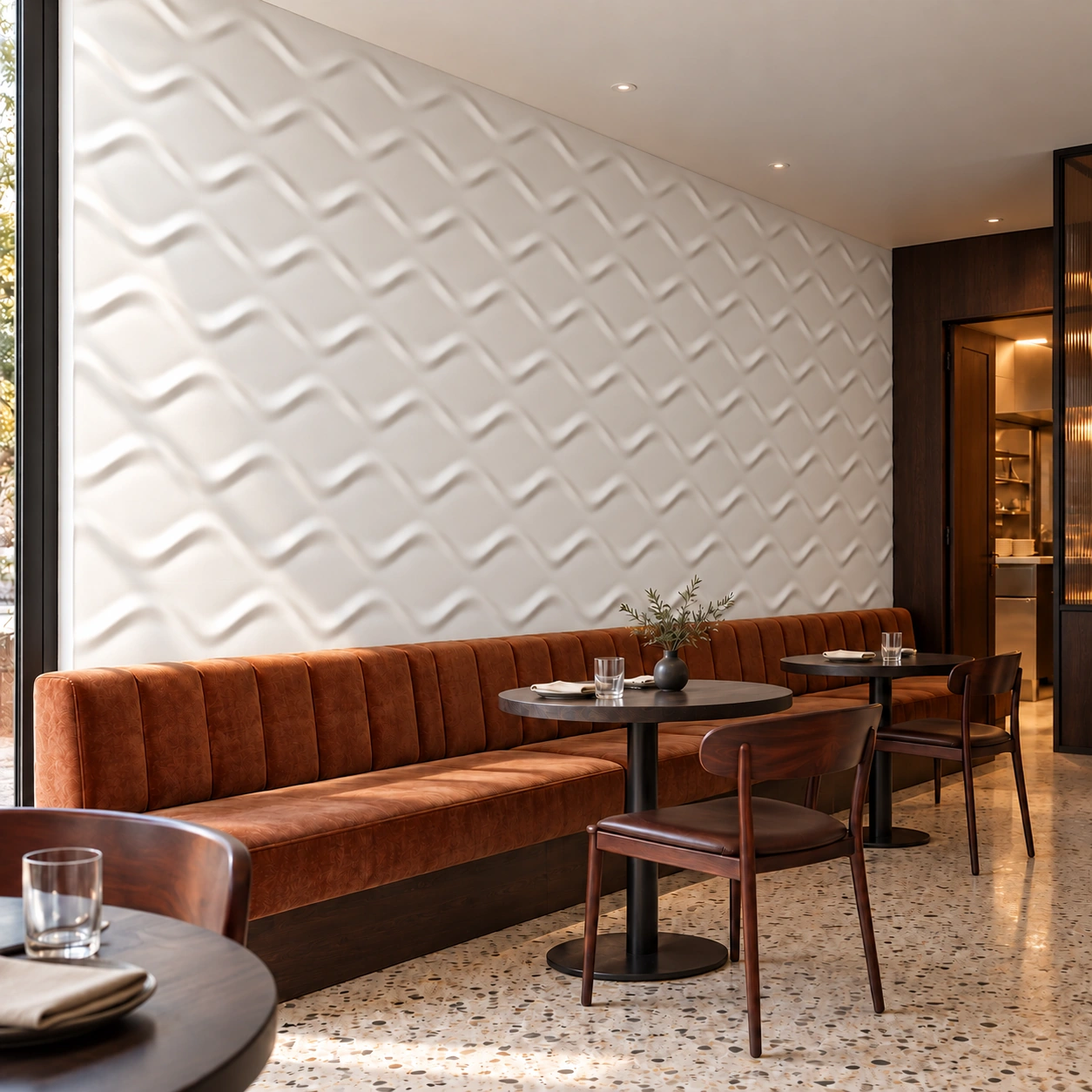
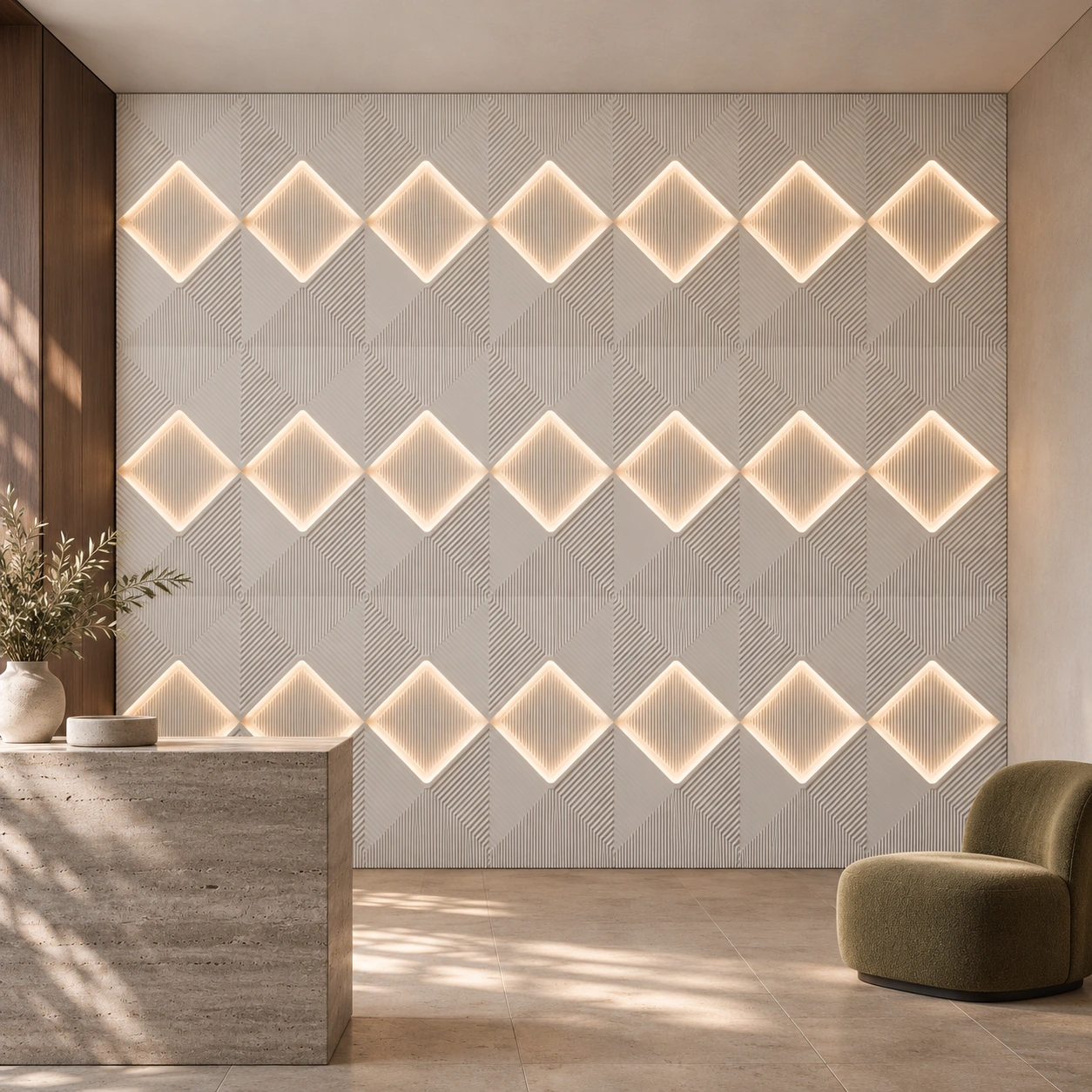
Behind the bed, behind the sofa or in the hallway, the wall is seen every day and in changing light. Here deep relief and the absence of visible joints make the difference, and plaster is the most logical choice. You can choose calm patterns, such as the twelve vertical waves of RILLA, or bolder ones, such as the four faceted diamonds of DYAREN. Have a look too at the linear, geometric and waves and folds collections.
Hospitality and public spaces
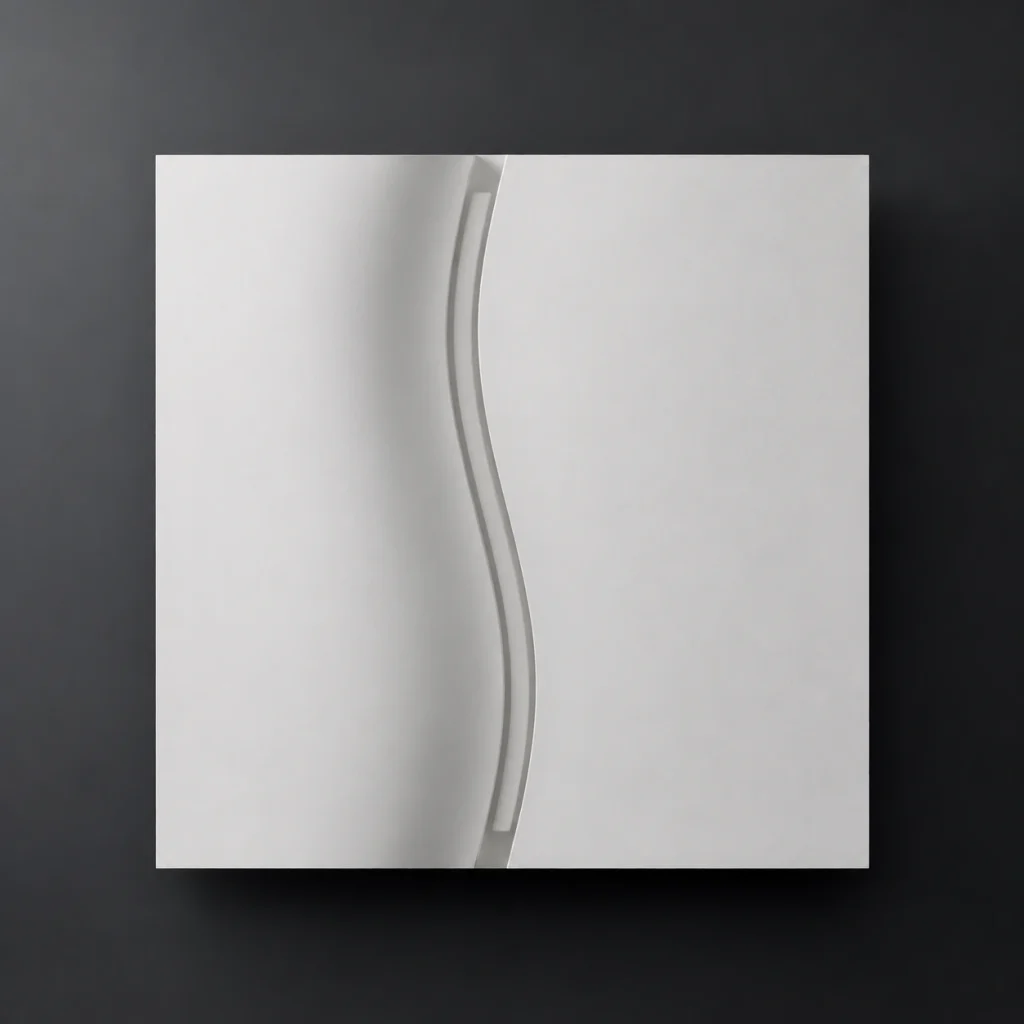
In a restaurant, hotel or shop, brand image, ease of cleaning and fire safety regulations all come into play. A mineral material with a documented class simplifies the conversation with the project designer, who decides which class each area requires. With organic materials, you will have to check the specific classification of each product. If you also want to integrate light, the plaster LED panels have a housing for the profile and are planned with a silicone LED profile with integrated 24 V light and a 24 V power supply, with components to be confirmed. One example is KYREVA, with flutes, a V fold and indirect light. There is more detail in the guide to 3D wall panels with LED lights.
Bathroom and kitchen
Here the answer is clear: in areas with direct water or constant humidity, choose ceramic 3D tiles or another material designed for the purpose. Plaster panels are not suitable for bathrooms, showers or damp areas. Self-adhesive tiles can work for a quick refresh of a kitchen splashback, always checking what the manufacturer says about heat and cleaning.
How to recognise a quality panel: a checklist
Whatever the material, ask yourself these questions:
- The exact material. ‘3D panel’ tells you nothing. Ask whether it is PVC, foam, MDF, ceramic or plaster, and whether it is reinforced.
- Thickness and relief. Ask for the actual thickness of the piece. For the same pattern, more depth usually means more shadow.
- Reaction to fire documentation. Ask for the document that supports the class and check which product it applies to and under what conditions. Be wary of generic terms such as ‘fireproof’ without documentation.
- How the joints are treated. Ask how they are dealt with: whether they are filled and disappear, or remain visible.
- Paint and finish. Check whether it can be painted, with what type of paint and whether it needs priming.
- Intended use. Interior or exterior, dry or damp environment. A good manufacturer states this clearly.
- Installation instructions. A reliable product comes with instructions on the substrate, the adhesive and the setting-out. For NALVEM panels there is the installation guide in PDF and the general technical data sheet.
Frequently asked questions
Which is better, PVC or plaster?
It depends on the goal. PVC is better if you want something cheap, light and quick, for temporary decoration or a rental. Plaster is better if you want deep relief, a continuous wall with no visible joints and a mineral material. The trade-off is that plaster is heavier, needs a more technical installation and is only suitable for dry interiors.
Are PVC panels fireproof?
Not as a general rule. PVC is an organic material and therefore combustible to a greater or lesser degree. Each product has its own reaction to fire classification, which depends on its formulation and thickness. If the use requires it, for example in commercial premises, ask the manufacturer for the document that supports the class and check with the project designer which class is needed.
Can PVC panels be painted?
Some can, but it depends on the product. Plastic does not offer the same adhesion as a mineral surface, and it usually needs cleaning first and a primer suitable for plastics. Check the manufacturer’s instructions before painting. NALVEM plaster panels, on the other hand, will be supplied ready to prime and paint with an interior paint suitable for plaster.
Are self-adhesive 3D tiles suitable for the living room?
They can work as a quick decorative fix, but that is not what they do best. They are designed mainly for refreshing kitchen splashbacks or tiling without building work, and their relief is very slight. In a living room, where the wall is seen up close and under side light, a panel with real relief and filled joints gives a more architectural result.
Which lasts longer?
There is no single figure: it depends on the product, the installation and the use. As a general rule, a mineral material well bonded to a sound substrate and painted behaves like a solid plastered wall. Self-adhesive products depend heavily on the substrate and the environment, and MDF is sensitive to moisture. In every case, good installation matters as much as the material.
Which is cheaper per m²?
PVC and self-adhesive panels are usually the cheapest options per square metre. NALVEM’s standard plaster panels have a planned guide price of €112/m², including Irish VAT (23%), about €27.95 per panel; use the country selector on the website to see the price with the VAT of other EU countries; outside the EU, price on request. Installation, adhesive, filler and paint are quoted separately. Always compare the total cost of the finished wall, not just the cost of the piece.
Which is easier to install?
Self-adhesive and PVC panels are the simplest: light pieces that are stuck up quickly. Plaster panels need a sound, flat substrate, a gypsum- or plaster-based adhesive, setting-out from a level line and filling of the joints, so a professional with experience in plaster, gypsum or tiling is recommended. The extra effort pays off in a continuous wall.
Next step
If you already know you want a continuous wall with real relief, browse the full catalogue of 3D plaster wall panels and choose a design. On each design’s page you can join the sample waiting list with ‘Request a sample’ or send your project through the enquiry form. To keep comparing, browse all the NALVEM guides.
More guides
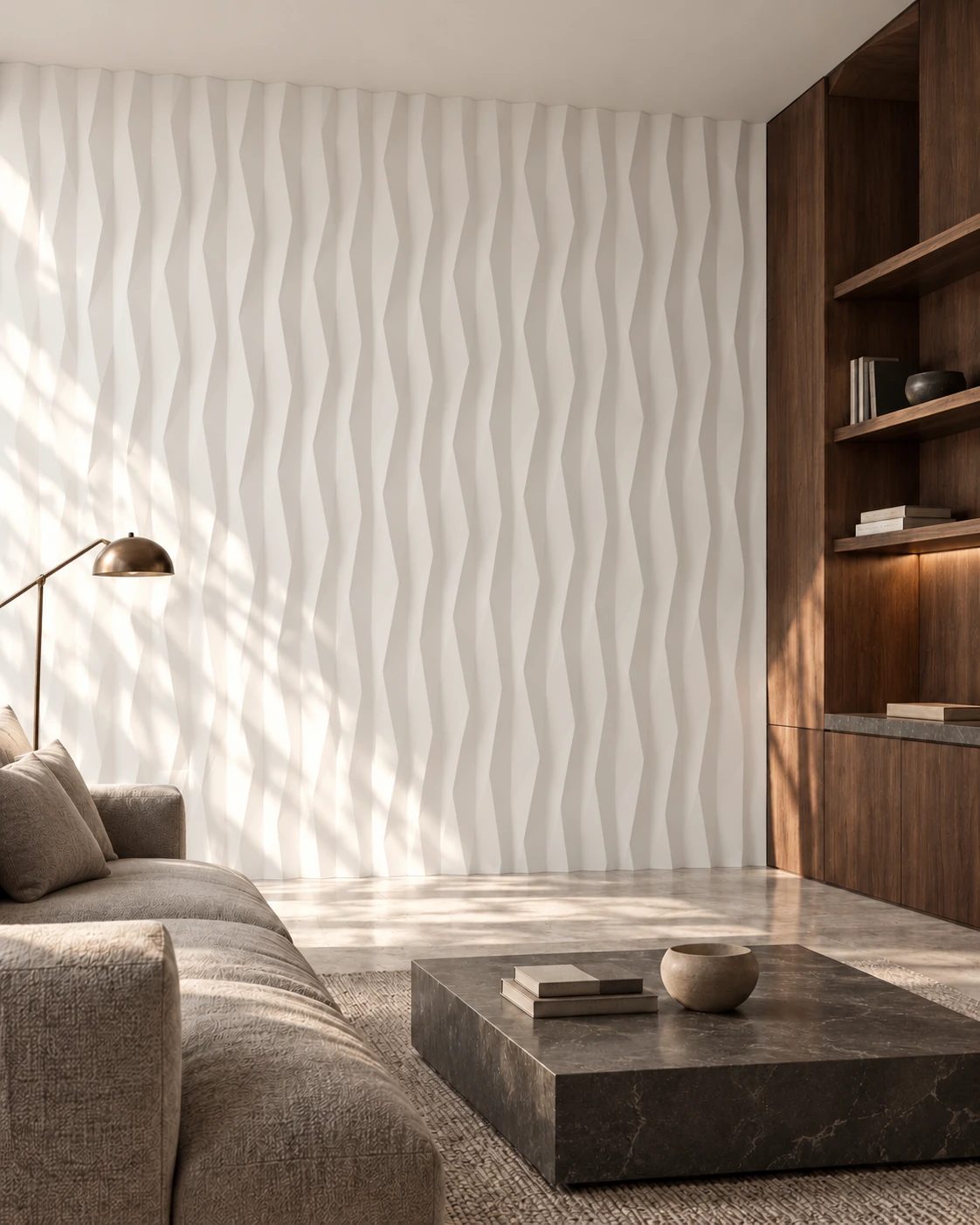 3D plaster wall panels: what they are, how to choose them and what they cost3D plaster wall panels: what they are, how they differ from PVC and MDF, the 50×50 format, where to use them, installation, reaction to fire and guide price.Read the guide →
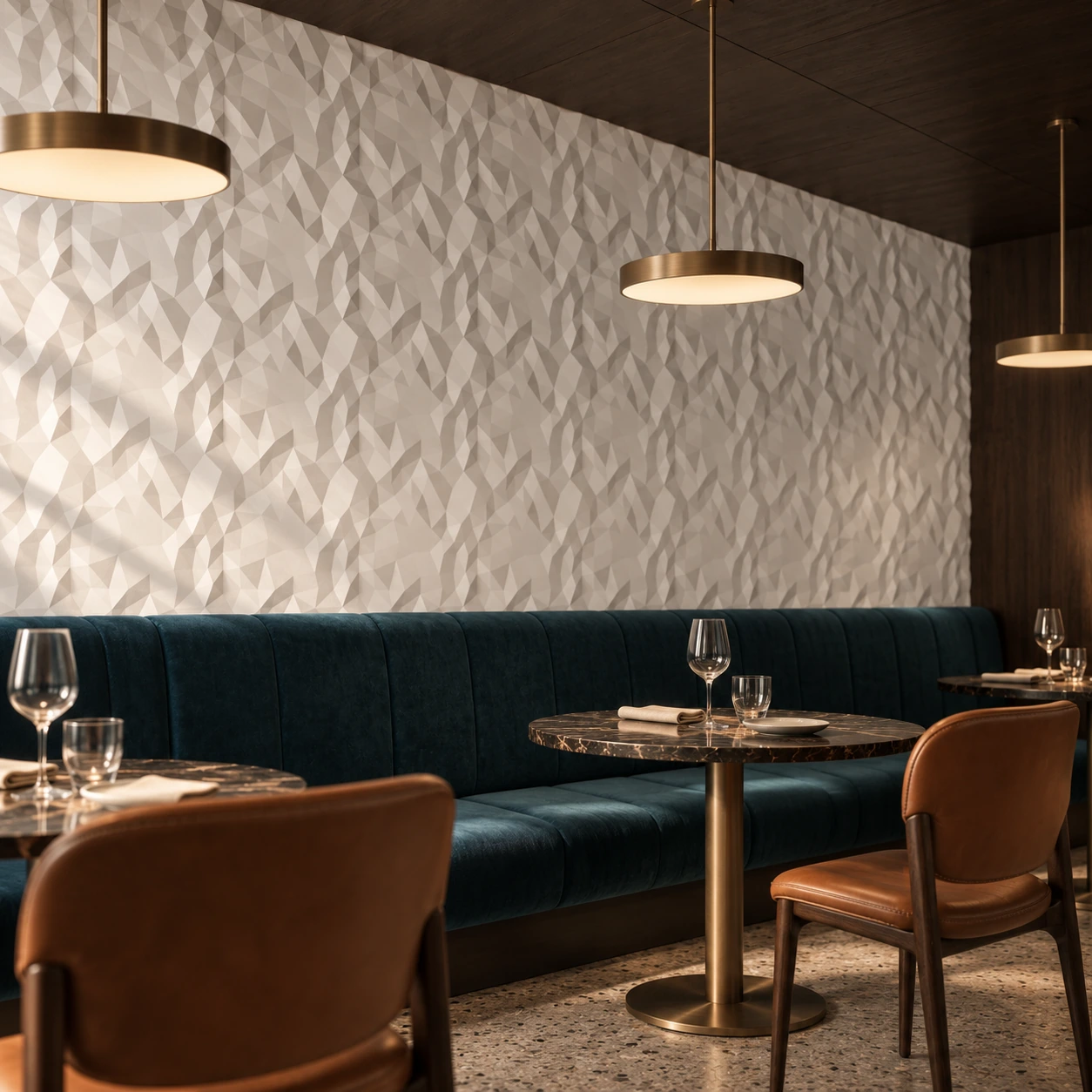 How to install 3D wall panels in plaster: substrate, adhesive, joints and paintHow to install 3D plaster wall panels: suitable substrates, gypsum-based adhesive, setting out, cutting, filling joints, priming and painting, step by step.Read the guide →
 Euroclass A1 reaction to fire: what it means and which decorative panels achieve itEuroclass A1 explained: the EN 13501-1 classes, s and d indicators, A1 vs A2, classification without testing, how paint affects it and what to ask for.Read the guide →