NALVEM · Guides
3D wall panels cost: price per m², how many panels you need and what else to budget for
Key points
- NALVEM 3D plaster wall panels have a planned guide price of €112/m², including Irish VAT (23%): about €27.95 per 50 × 50 cm panel.
- Each panel covers 0.25 m²: you need 4 panels per m², plus a waste allowance that should always be rounded up.
- With a 10% waste allowance, a 10 m² wall needs 44 panels and the material starts at €1,229.80.
- Installation, adhesive, filler, paint, electrical work for LED panels and transport are quoted separately.
- LED panels, planned with an LED profile and 24 V power supply, are priced on request.
You have a living room wall, the wall behind a bed or a business reception you want to clad, and before you fall for a design you need to know how much you are going to spend. This guide gives you the price of NALVEM 3D plaster wall panels, shows you how to work out how many pieces you need and explains what other items you must add to get a realistic figure. If you are searching for ‘3D wall panels cost’ because you are comparing options, here are the numbers and the method, with three worked examples step by step.
3D wall panels cost: what drives the price
Two panels that look similar in a photo can have very different prices. These are the factors.
Material
This is the biggest factor. A PVC or lightweight foam panel, designed simply to be stuck on the wall, is not the same product as a mineral piece. NALVEM panels are made of fibre-reinforced plaster, a fine casting plaster: the finest and purest grade of gypsum plaster. So when you search for ‘3D plaster wall panels’ or ‘gypsum 3D wall panels’, you are talking about the same material. The piece is made of plaster, water and reinforcing fibre; the formulation is being defined.
Relief and thickness
Relief is what turns a flat wall into a surface with shadows. In a mineral panel, more relief usually means more material and a more demanding mould. NALVEM panels are between 8 and 30 mm thick depending on the design and weigh, by calculation, roughly between 4 and 6 kg per piece. It is not a weighed figure but a reference for planning.
Format
The format determines how many pieces you need and how many joints you will have to fill. All NALVEM panels measure 500 × 500 mm (50 × 50 cm). Each covers 0.25 m², so the calculation is straightforward: 4 panels per m². To compare prices, always convert to euros per square metre.
Documentation
Part of a panel’s value cannot be seen on the wall: it is in its paperwork. For an interior designer, an architect or premises open to the public, that matters. NALVEM publishes a general technical data sheet and an installation guide. The formulation is being defined with class A1 as its target; until this is documented, NALVEM does not declare a class for the product. We explain it in detail in the guide to Euroclass A1.
Price of NALVEM 3D plaster wall panels: €112/m² planned
The planned guide price of the standard panels is €112/m², including Irish VAT. As each square metre takes 4 panels, that is about €27.95 per panel. It is a figure to work with from the start, not a firm quote. The price follows the VAT rate of each EU country: use the country selector on the website to see it for other EU countries; outside the EU, price on request.
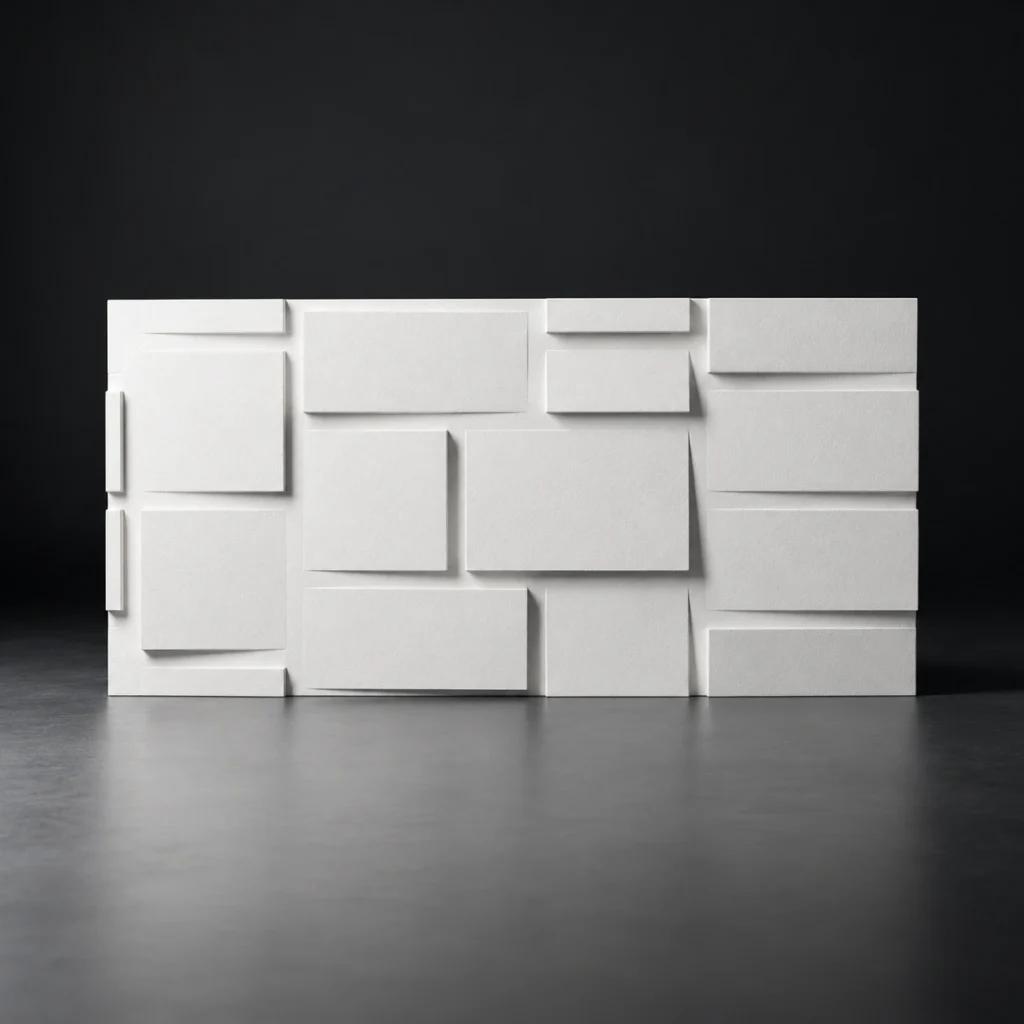
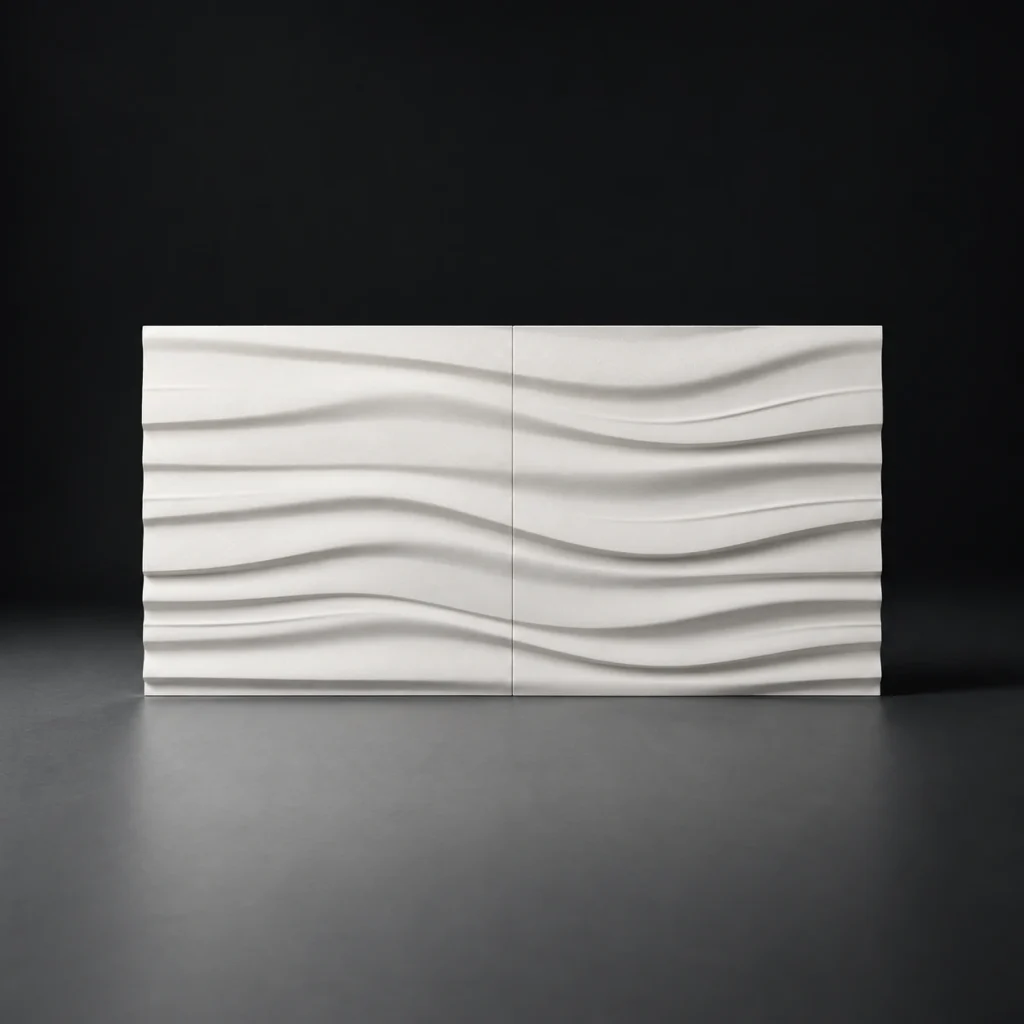
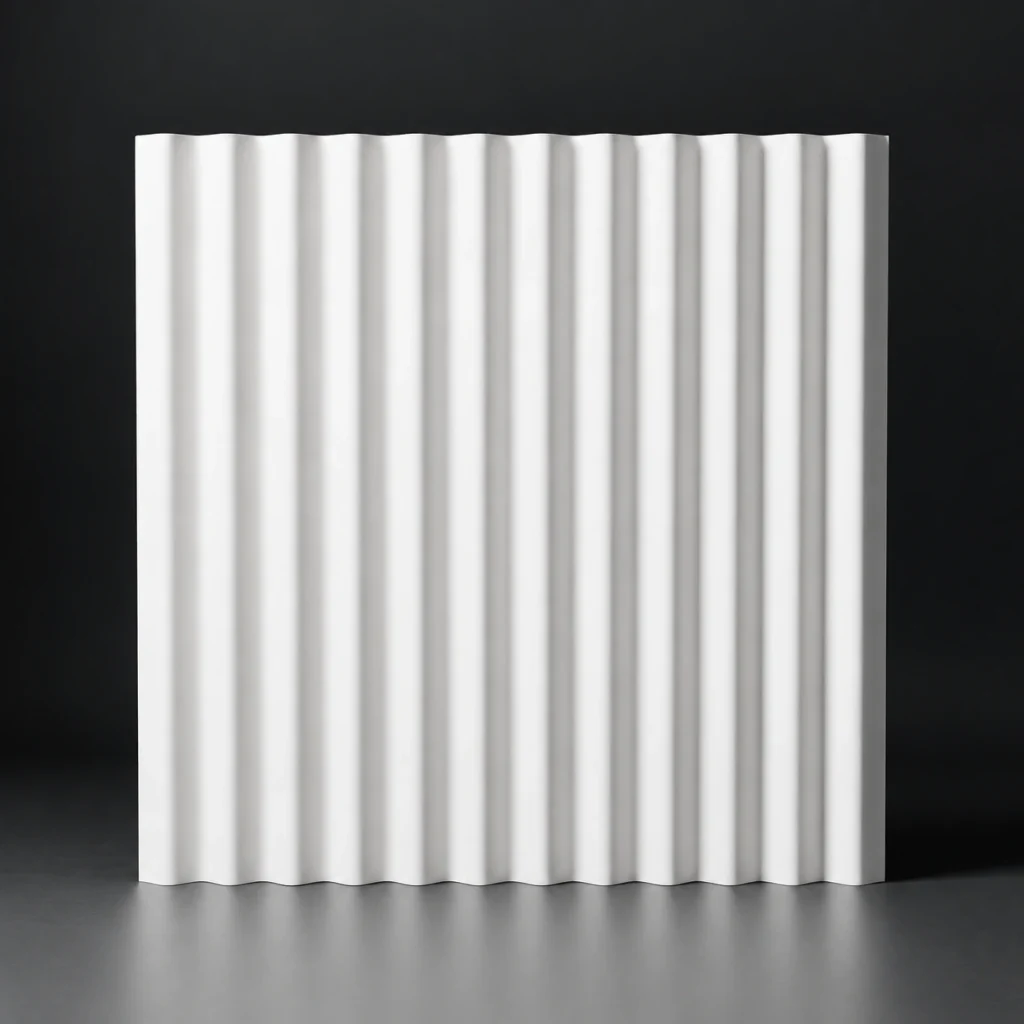
This price is for the piece: a 50 × 50 cm panel in matt white, with a fine mineral texture, ready to prime and paint on site in the colour of your choice. It applies to the designs in the standard collections:
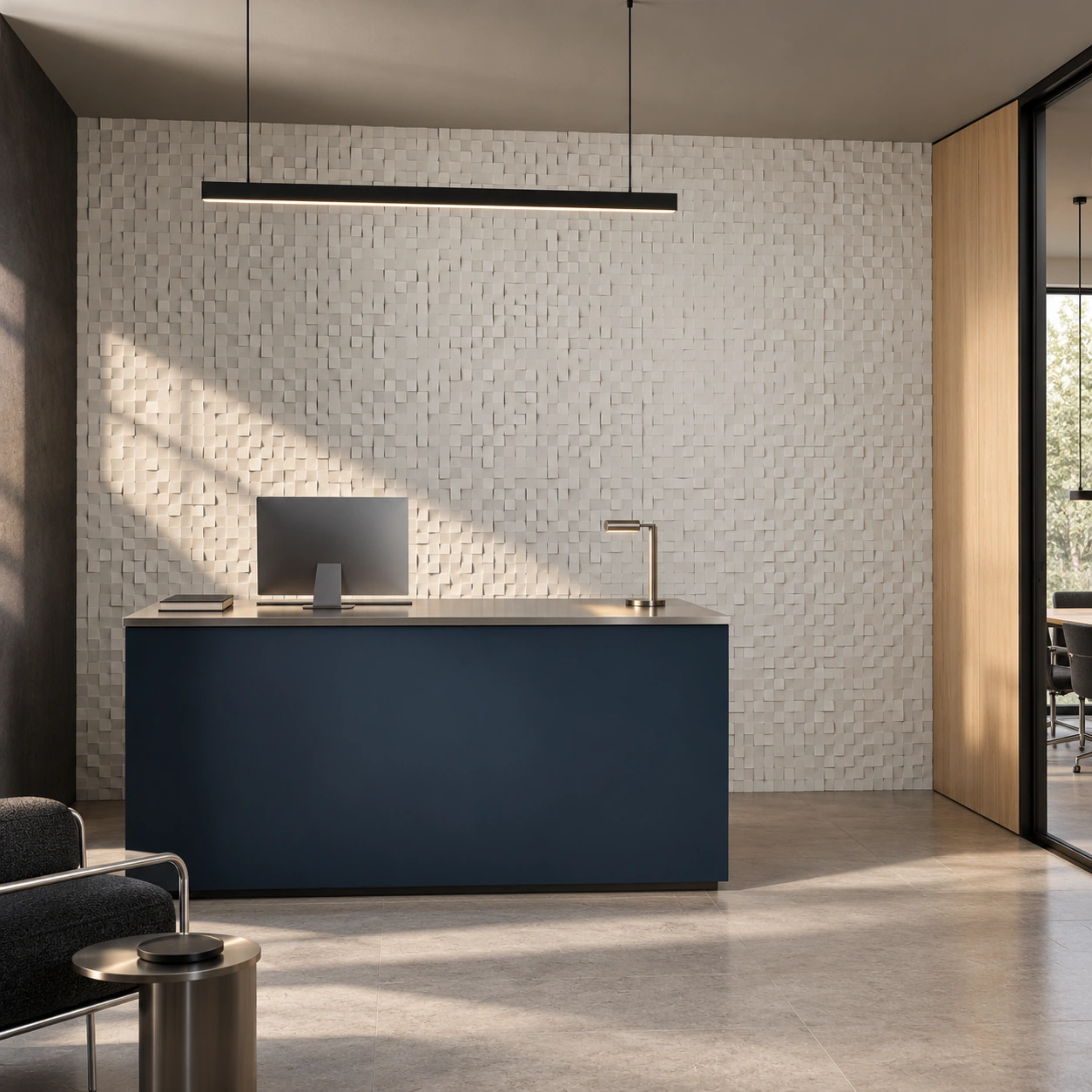
- Geometric: facets, squares, prisms and inclined planes, such as KELDRYN or TESSA.
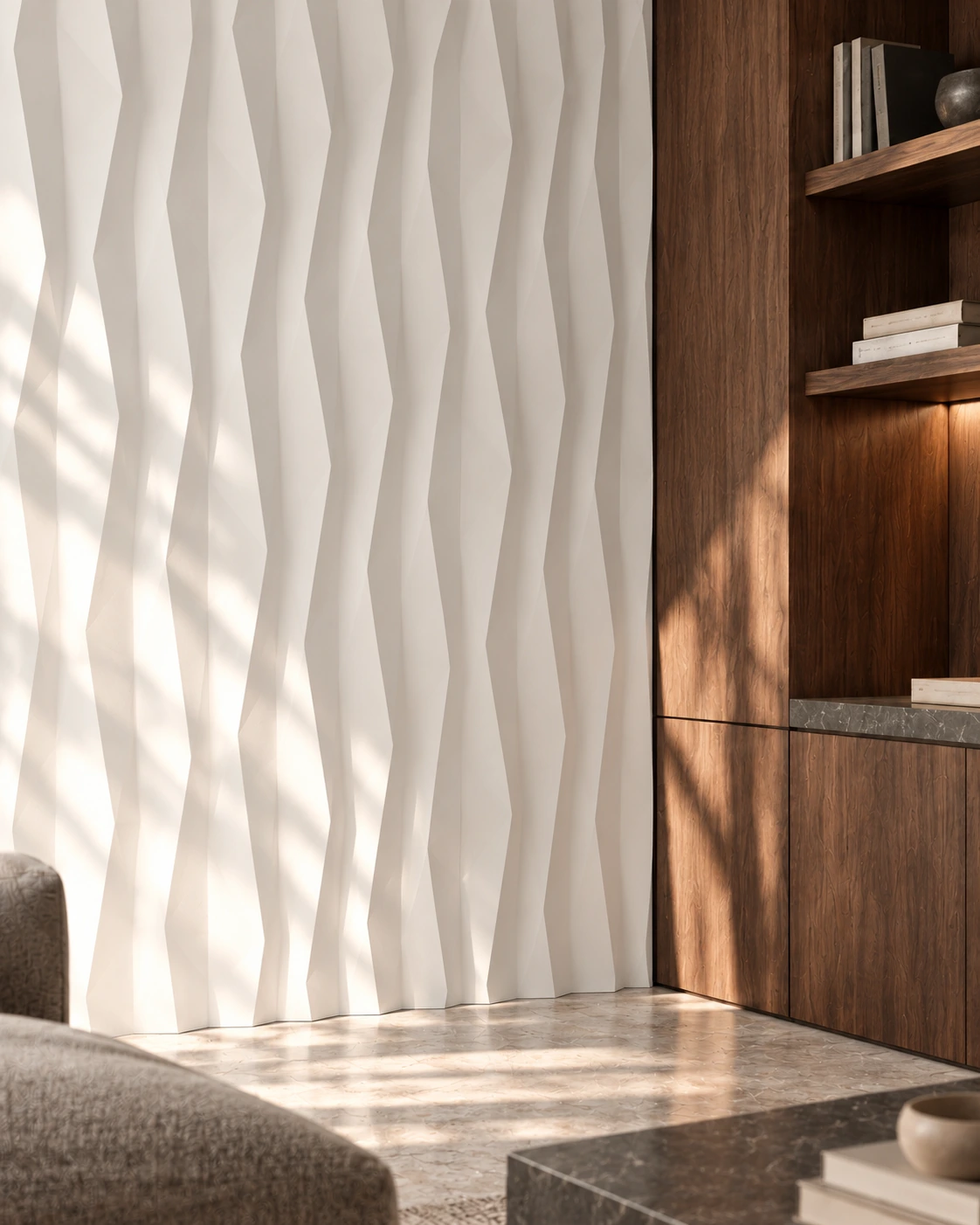
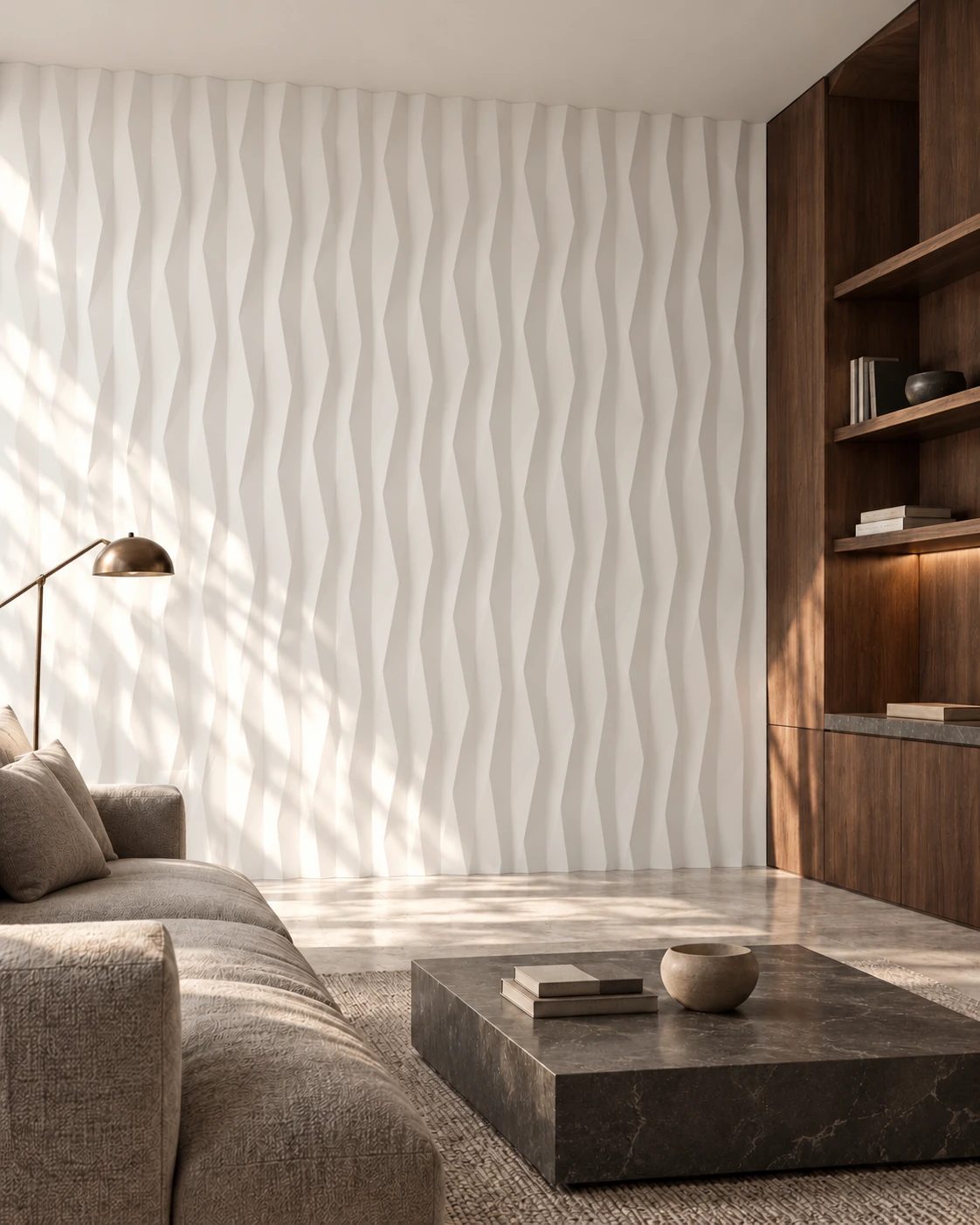
- Linear: vertical folds and waves, such as VELIN.
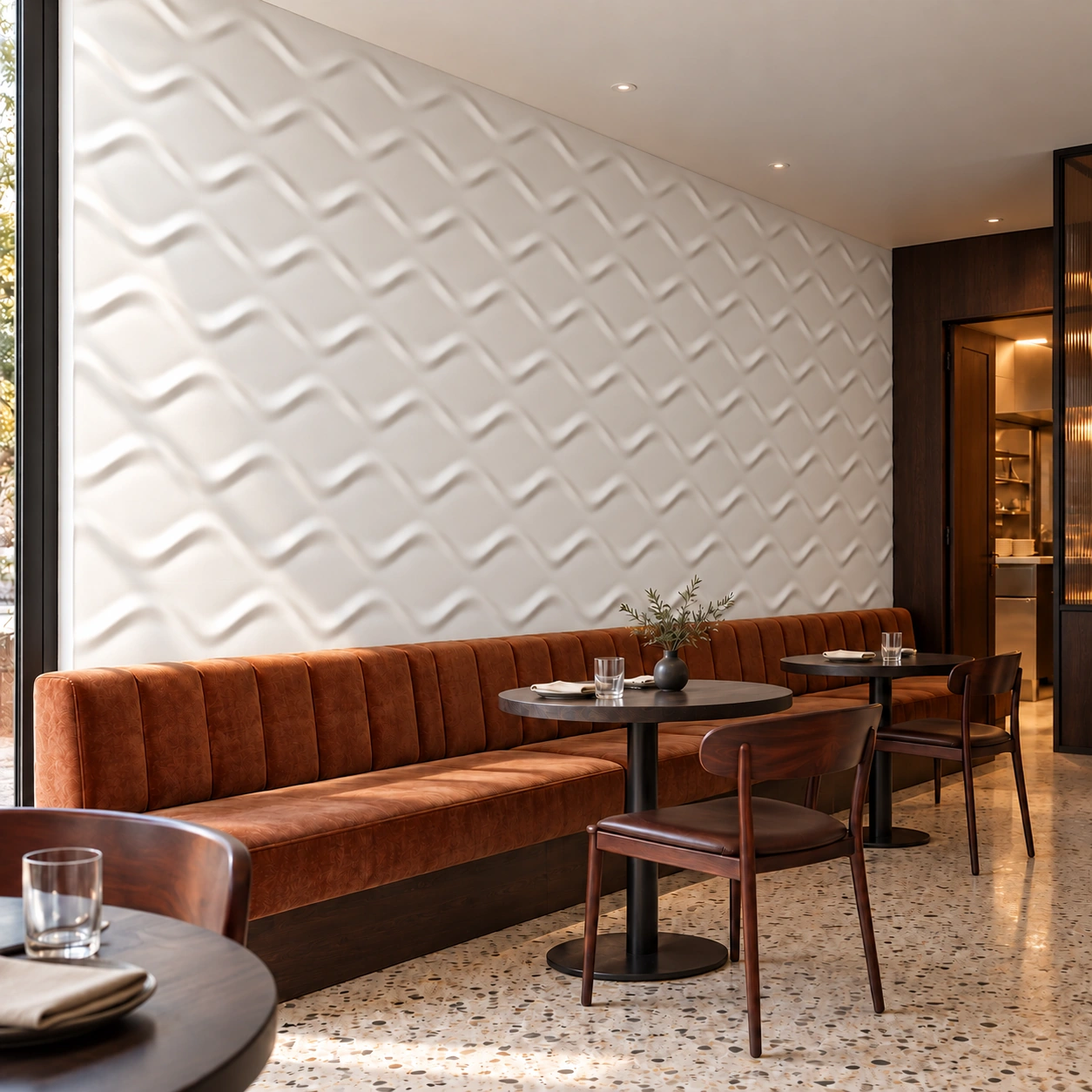
- Waves and folds: curves and bands, such as ONDEA.
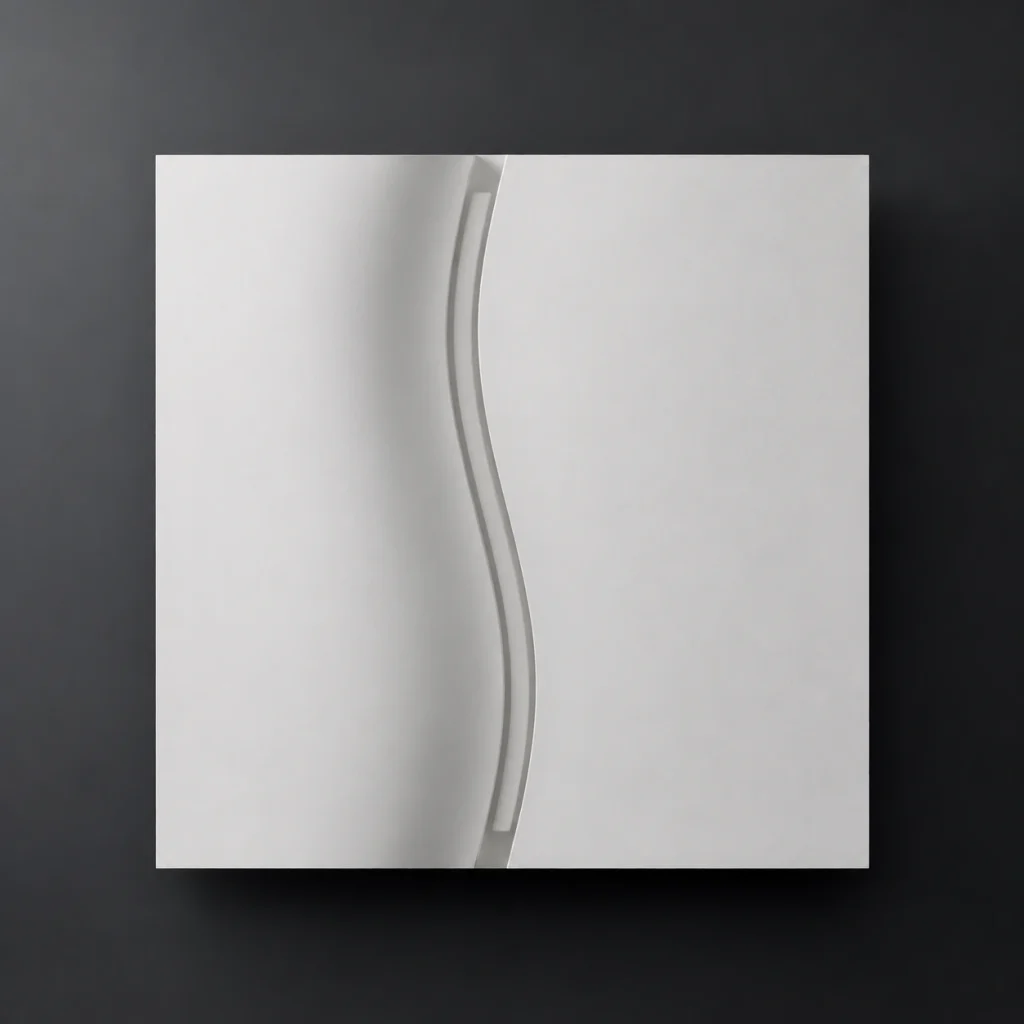
LED panels are priced on request. They include a housing for an LED profile, either hidden beneath a plaster edge for indirect light or in an open groove for exposed linear light, and are planned with a silicone LED profile with integrated 24 V light and a 24 V power supply, with components to be confirmed.
Each product page has a calculator: you enter the square metres and it gives you the number of panels and an approximate cost for the material. You can browse the full catalogue and try it on the design you like.
How to work out how many 3D wall panels you need
The calculation has four steps. Note down each figure: you will need it to ask for a quote.
1. Measure
Measure the width and height of the area you are going to clad, in metres. Multiply the two values and you have the square metres. A wall 4 m wide and 2.5 m high is 10 m². If the area is not rectangular, divide it into rectangles, work each one out separately and add them up. Measure at two or three points and take the largest figure.
2. Deduct openings
Deduct the area of doors, windows and other large openings you are not going to clad. A 0.8 × 2.1 m door takes up 1.68 m²; on a 10 m² wall that would leave 8.32 m² of usable area. Do not deduct sockets, switches or small openings: the panel is cut anyway and the piece is used up. There will be offcuts around each opening: do not reduce the waste allowance because you have deducted them.
3. Multiply by 4 panels per m²
Each 50 × 50 cm panel covers 0.25 m². Multiply the square metres by 4 and round up if the result is not a whole number. With 8.32 m² you get 33.28 panels, that is 34. With exactly 10 m², 40 panels.
4. Add the waste allowance
The waste allowance covers cuts at edges and corners, offcuts around openings and the odd piece that may be damaged on site. As a reference, allow 10% on the number of panels and always round up to whole panels. If the wall has many openings, corners or irregular junctions, you may need a little more; discuss it with your installer.
Some designs are laid by rotating the pieces or combining modules. ORBA has four modules (A, B, C and D) and ONDEA alternates two modules (A and B) in each row. In these cases, split the total between modules according to the composition given on the data sheet, and work out the waste allowance for each one. Before buying, go over the setting-out with the guide to installing 3D plaster wall panels.
Three worked examples: how much it costs to clad a wall
All three cases use the same rules: 4 panels per m², a 10% waste allowance rounded up to whole panels and €27.95 per panel, which is the planned guide price of €112/m² including VAT. A surface with no openings is assumed.
| Case | Area | Panels without waste | 10% waste | Panels to order | Material from (incl. VAT) |
|---|---|---|---|---|---|
| Living room wall (4 × 2.5 m) | 10 m² | 10 × 4 = 40 | 40 × 0.10 = 4 | 40 + 4 = 44 | 44 × €27.95 = €1,229.80 |
| Wall behind the bed (3 × 2 m) | 6 m² | 6 × 4 = 24 | 24 × 0.10 = 2.4 → 3 | 24 + 3 = 27 | 27 × €27.95 = €754.65 |
| Reception (5 × 4 m) | 20 m² | 20 × 4 = 80 | 80 × 0.10 = 8 | 80 + 8 = 88 | 88 × €27.95 = €2,459.60 |
Look at the wall behind the bed: 10% of 24 panels is 2.4 pieces, and you cannot order half a piece. It is rounded up to 3. That is why the material for that wall, €754.65, is a little more than multiplying 6 m² by €112/m², which would give €672. The price per m² is for comparing; the number of whole panels is what you actually buy.
Important: these are guide figures for material only. They do not include installation, adhesive, filler, primer, paint or transport. To get the amount for your case, use the calculator on the page of the design you like or send an enquiry.
What else to budget for: installation, building materials, paint, electrical work and transport
The panel is the main item, but not the only one. To know how much it costs to clad a wall, add up these items.
Installation
We recommend that the panels are installed by a professional with experience in plaster, gypsum or tiling. The work includes preparing the substrate, setting out from a level line, bonding, cutting and filling the joints. Ask your installer for a quote with the square metres, the number of panels and the chosen design: a relief with channels or steps needs more care at the joints than one with flat faces.
Building materials
Installation uses a gypsum- or plaster-based adhesive and, if the substrate does not guarantee adhesion, supplementary mechanical fixing. The joints are filled with plaster or fine gypsum filler and sanded. Quantities and drying times depend on each manufacturer; check their documentation. The installation guide in PDF covers the whole process.
Substrate preparation
The wall must be sound, flat, dry and clean. If it has damp or flaking patches or is out of plumb, these will need correcting first. It is worth having the installer see it in person.
Priming and painting
The panels will arrive in matt white and the whole surface is primed before painting with an interior paint suitable for plaster. You can choose any colour, and the paint is a separate cost to add.
Electrical work for LED panels
If you choose an LED panel, such as KYREVA for indirect light or LYREN for exposed linear light, a silicone LED profile with integrated light and a 24 V power supply are planned. Add the electrical work: the power supply must be connected to the mains by a qualified, authorised electrician. You will find the details in the guide to 3D wall panels with LED lights and indirect lighting.
Transport
Transport is quoted separately, according to the destination and the volume of the order. Bear in mind that, at about 4 to 6 kg per piece, 44 panels add up to roughly 176 to 264 kg, depending on the design.
PVC or plaster: why the price per m² does not tell the whole story
If you compare the price of 3D wall panels in a DIY store, you will see many PVC or foam panels with a lower price per square metre. The detailed analysis is in the guide comparing 3D plaster, PVC and tile wall panels; here are the points that affect the budget.
Finish
A PVC panel usually comes with its final factory finish and, often, with joints that show between pieces. A plaster panel is fitted, the joints are filled and the whole wall is painted: the result can read as one continuous surface. That continuity takes site work, and it is exactly what makes the difference.
Behaviour in fire
PVC, polyurethane foam and MDF are organic materials and therefore combustible to a greater or lesser degree. The specific classification depends on each product; check its documentation. Plaster is a mineral material. The formulation is being defined with class A1 as its target; until this is documented, NALVEM does not declare a class for the product. Paint applied on site is an additional coating whose behaviour depends on the product. For commercial premises or an area used by the public, confirm the requirements with the project designer.
Durability and use
How long any wall covering lasts depends on the material, the installation and the use. A light self-adhesive panel is usually designed for quick fitting; a bonded and filled plaster panel becomes part of the wall and is finished with the same paint as the rest of the surface. Bear its limits in mind too: NALVEM panels are for dry interiors. They are not suitable for exteriors, bathrooms, showers or areas with direct water or constant humidity, and they have no structural function: do not hang shelves or furniture from them.
The useful question is not which panel is cheapest per square metre, but how much the finished wall you want will cost. If you want to understand the material better, start with the guide to 3D plaster wall panels.
How to ask for a quote: what information to send
The more information you give, the more accurate the quote will be. Use the form on the design’s page or the enquiry form and include:
- The design or designs you are interested in, by name.
- The measurements of each wall (width × height) and, if any, of the openings to be deducted.
- The number of panels the calculator gave you, including the waste allowance.
- The type of space: home, hotel, restaurant, shop or office, and the specific room.
- The condition of the substrate: plasterboard partition, plastered brick, painted wall.
- The delivery town or city, so that transport can be priced.
- For LED panels, the type of light you are looking for: indirect or exposed linear.
- Plans or photos of the wall, if you have them.
If you want to see and touch the material before deciding, join the sample waiting list with the ‘Request a sample’ button on each design’s page.
Frequently asked questions
How much does a 3D panel cost?
It depends on the material, the relief and the format. A 50 × 50 cm NALVEM 3D plaster panel costs about €27.95, which corresponds to the planned guide price of €112/m² including VAT. That is the price of the material, without installation or transport. LED panels are priced on request. To compare with other products, always convert the price to euros per square metre.
How much does it cost to clad a 10 m² wall?
A 10 m² wall needs 40 panels; with a 10% waste allowance, 44. At €27.95 per panel, the material starts at €1,229.80, including VAT. To that figure you must add installation, adhesive, filler, primer, paint and transport, which are quoted separately. If there are large doors or windows, deduct their area before calculating.
Does the price include installation?
No. The guide price of €112/m² covers the panels only. Installation is quoted separately, as are adhesive, filler, paint and transport. We recommend that it is done by a professional with experience in plaster, gypsum or tiling. Ask them for a quote with the square metres, the number of panels and the design, and show them the installation guide.
What about VAT?
The planned guide price of the standard panels, €112/m², already includes Irish VAT. In other words, the figure you get from the calculator on each page or from the examples in this guide is what you would pay for the material. The other items, such as installation or transport, are quoted separately, so check what each quote includes.
How much waste should I allow for?
As a reference, 10% on the number of panels, always rounded up to whole pieces. It covers cuts at edges, offcuts around openings and the odd piece damaged on site. On walls with many openings, corners or irregular junctions you may need a little more. In designs with several modules, work out the waste allowance for each module separately.
How much do LED panels cost?
LED panels are priced on request. They include a housing for the profile: hidden beneath a plaster edge for indirect light or in an open groove for exposed linear light. They are planned with a silicone LED profile with integrated 24 V light and a 24 V power supply, with components to be confirmed. The power supply must be connected to the mains by a qualified, authorised electrician, and this is quoted separately.
Is there a minimum order?
No minimum order conditions are published on the website. If your project is small, such as the wall behind a bed or a stretch of wall, say so in your enquiry together with the measurements and the number of panels the calculator gives you, and we will reply based on your case. While you decide, you can join the sample waiting list from each design’s page.
Next step: choose a design and calculate your wall
With the measurements of your wall you can now get to work. Browse the catalogue of 3D wall panels, open the page of the design you like and use its calculator to find out how many panels you need and the approximate cost of the material. Once you have decided, send the details through the enquiry form. The guides index has the rest of the content.
More guides
 3D plaster wall panels: what they are, how to choose them and what they cost3D plaster wall panels: what they are, how they differ from PVC and MDF, the 50×50 format, where to use them, installation, reaction to fire and guide price.Read the guide →
 PVC vs plaster wall panels, foam or 3D tiles: the real differences and which to choosePVC vs plaster wall panels, polyurethane foam, MDF or 3D tiles: relief, joints, weight, paint, reaction to fire and which suits a rental, home or business.Read the guide →
 How to install 3D wall panels in plaster: substrate, adhesive, joints and paintHow to install 3D plaster wall panels: suitable substrates, gypsum-based adhesive, setting out, cutting, filling joints, priming and painting, step by step.Read the guide →