NALVEM · Guides
3D plaster wall panels: what they are, how to choose them and what they cost
Key points
- NALVEM panels are made of fibre-reinforced plaster, based on fine casting plaster: the purest, finest grade of gypsum plaster.
- 50 × 50 cm format: 4 panels per m², with a thickness of 8 to 30 mm depending on the design.
- They will be supplied in matt white, ready to prime and paint on site, and are for dry interiors only.
- Reaction to fire: formulation being defined with class A1 as its target.
- Planned guide price of €112/m², including Irish VAT (23%); LED panels, price on request.
You have a plain wall in the living room, behind the bed or in the reception area of a business, and you want it to be more than a flat white surface. You search for ‘3D wall panels’ and nearly everything that comes up is self-adhesive PVC tiles, faux brick or timber slats. This guide explains the other option: 3D plaster wall panels, what they are, how they differ, what sizes they come in, where they can and cannot go, how they are installed and what they cost. It is written for you if you are renovating your home, but also if you are an interior designer or installer and need clear information to specify them.
What are 3D plaster wall panels?
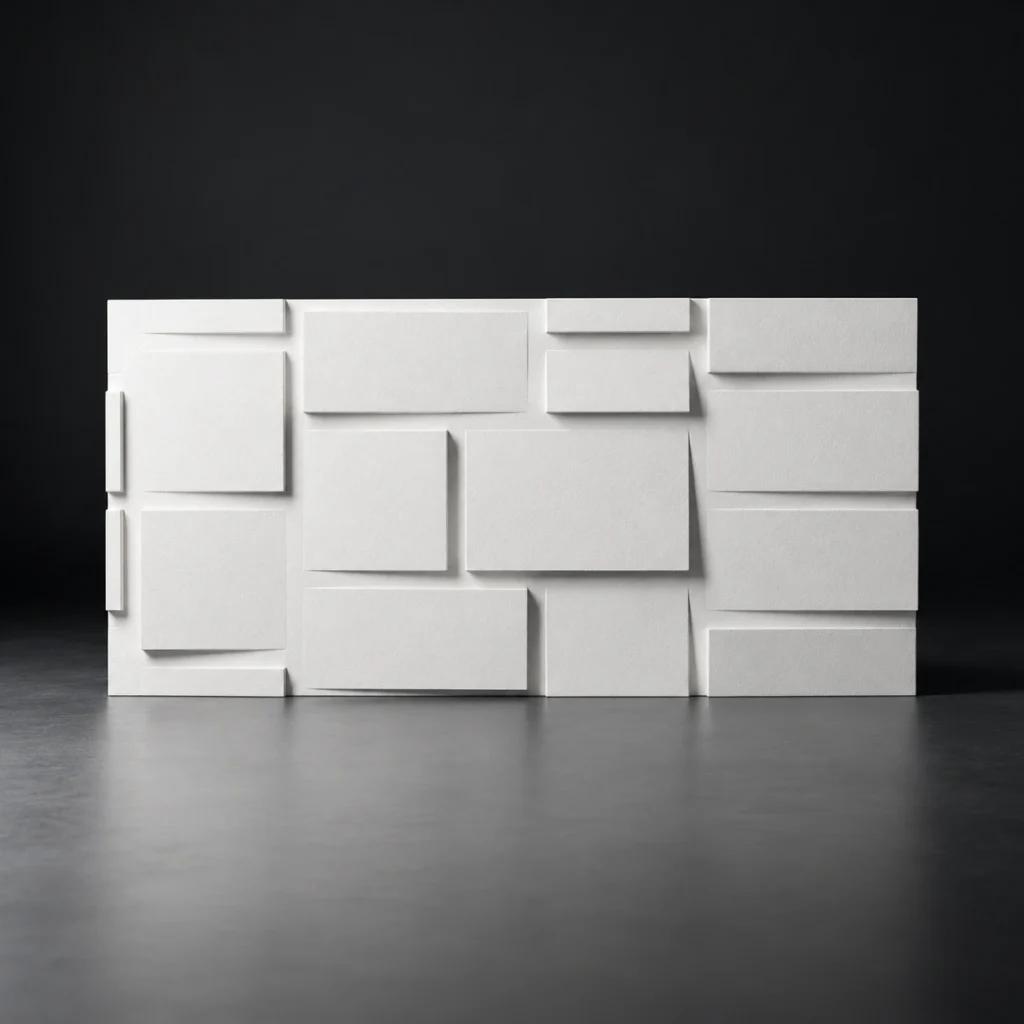
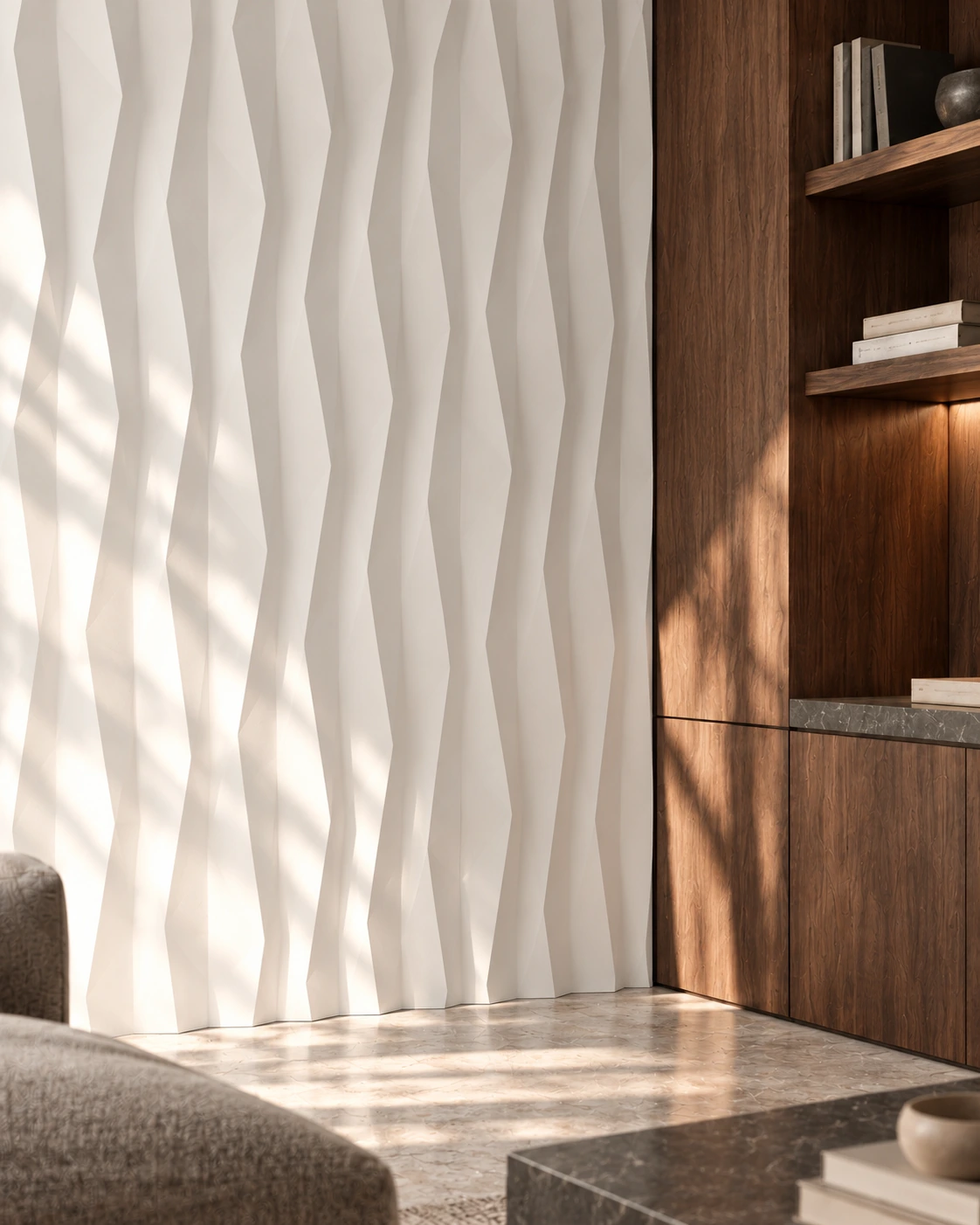
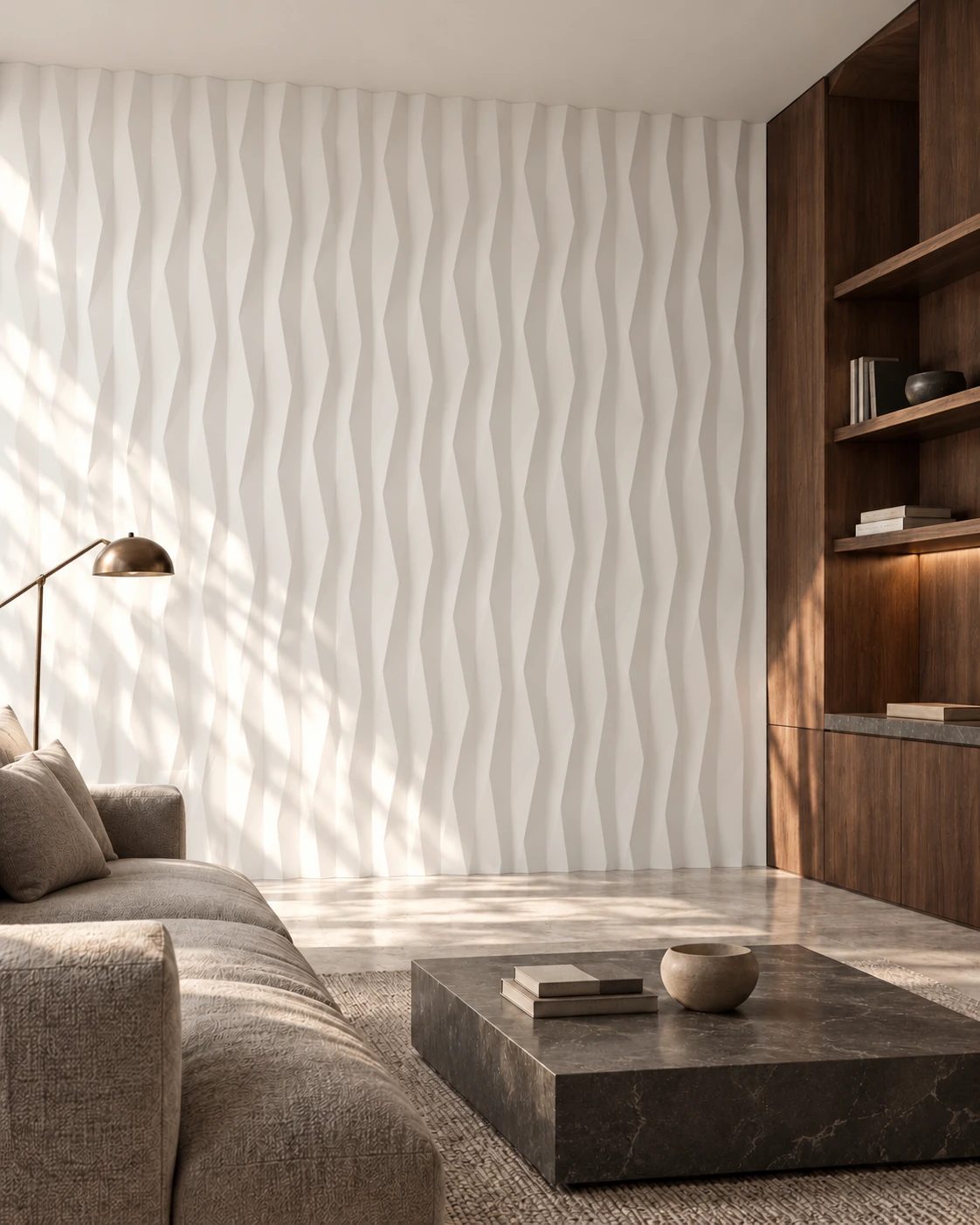
A 3D plaster panel is a relief wall covering: it has facets, waves, folds or hollows that create light and shadow across the wall. It is bonded to the wall like a cladding and, once the joints have been filled and the surface painted, the whole wall reads as one continuous surface rather than separate pieces.
Plaster and gypsum: the same family
In the UK and Ireland people search for ‘plaster’, while ‘gypsum’ is the word used in many international searches; both belong to the same material family. The material of these panels is a fine casting plaster, the finest and purest grade of gypsum plaster. That is why it can reproduce crisp edges, soft curves and fine mineral textures. When you read ‘plaster panels’ or ‘decorative 3D gypsum panels’, we are talking about the same type of product. In this guide we use both words.
How a NALVEM panel is made
NALVEM is a Spanish brand that designs decorative 3D panels in fibre-reinforced plaster for interior walls. Each piece is formed from a mix of plaster, water and reinforcing fibre that takes the shape of the design in a mould. The composition is simple:
- Plaster, which provides the finish and the definition of the relief.
- Water, to form the mix.
- Reinforcing fibre, which improves the cohesion of the piece.
The formulation is being defined and its organic content matters for reaction to fire, as you will see further down. The piece will arrive in matt white, with a fine mineral texture, ready to prime and paint on site in the colour of your choice.
3D plaster wall panels compared with PVC, foam and MDF: the differences in a table
If you are coming from a DIY store, the usual comparison is with PVC, polyurethane foam or MDF panels. They are different products and each has its place. The table sums up the general differences; for the other materials, the values depend a great deal on the manufacturer, so always check their documentation.
| Feature | Plaster (fibre-reinforced) | PVC | Polyurethane foam | MDF |
|---|---|---|---|---|
| Finish | Matt mineral, painted on site | Usually factory-finished, often glossy or imitating other materials | Usually primed or white | Timber, lacquered or veneered depending on the product |
| Joints | Filled with plaster or gypsum filler and sanded | Usually butted or finished with trims | Depends on the product; usually sealed | Usually left visible or finished with trims |
| Relief | 8 to 30 mm thick in NALVEM panels, with well-defined edges | Usually shallow | Varies with the design | Usually slats or routed grooves |
| Approximate weight | Between 4 and 6 kg per 50 × 50 cm piece (calculated) | Light | Very light | Medium; depends on thickness |
| Paint | Yes, after priming the whole surface | Depends on the product; check its documentation | Usually paintable with a suitable primer | Yes, with suitable preparation |
| Fire | Target: class A1; documentation in preparation | Organic material, combustible to a greater or lesser degree | Organic material, combustible to a greater or lesser degree | Organic material, combustible to a greater or lesser degree |
| Use | Dry interiors | Depends on the product | Depends on the product | Interiors; sensitive to moisture depending on the product |
For the full comparison, including 3D tiles, read the guide Plaster, PVC or 3D tiles: which to choose.
Sizes: the 50 × 50 cm format and how many panels you need per m²
50×50 3D wall panels are a popular size, and it is the one NALVEM uses: each piece measures 500 × 500 mm. With that size the maths is simple:
- Each panel covers 0.25 m².
- You need 4 panels for every m² of wall.
- Thickness ranges from 8 to 30 mm depending on the design. Soft reliefs are thinner; deep faceted designs reach the top of the range.
- The reference weight is roughly 4 to 6 kg per piece, depending on the design. It is calculated, not weighed.
How to work out how many you need
- Measure the width and height of the wall and multiply them to get the m².
- Multiply the m² by 4.
- Add a margin for cuts and finishing. 10% is a reasonable allowance for a rectangular wall without many openings.
Example: a 4 × 2.5 m wall is 10 m². That is 40 panels, or 44 with a 10% allowance for waste. If the wall has windows, doors or corners, ask for the setting-out to be checked before you settle on the quantity.
Types of design
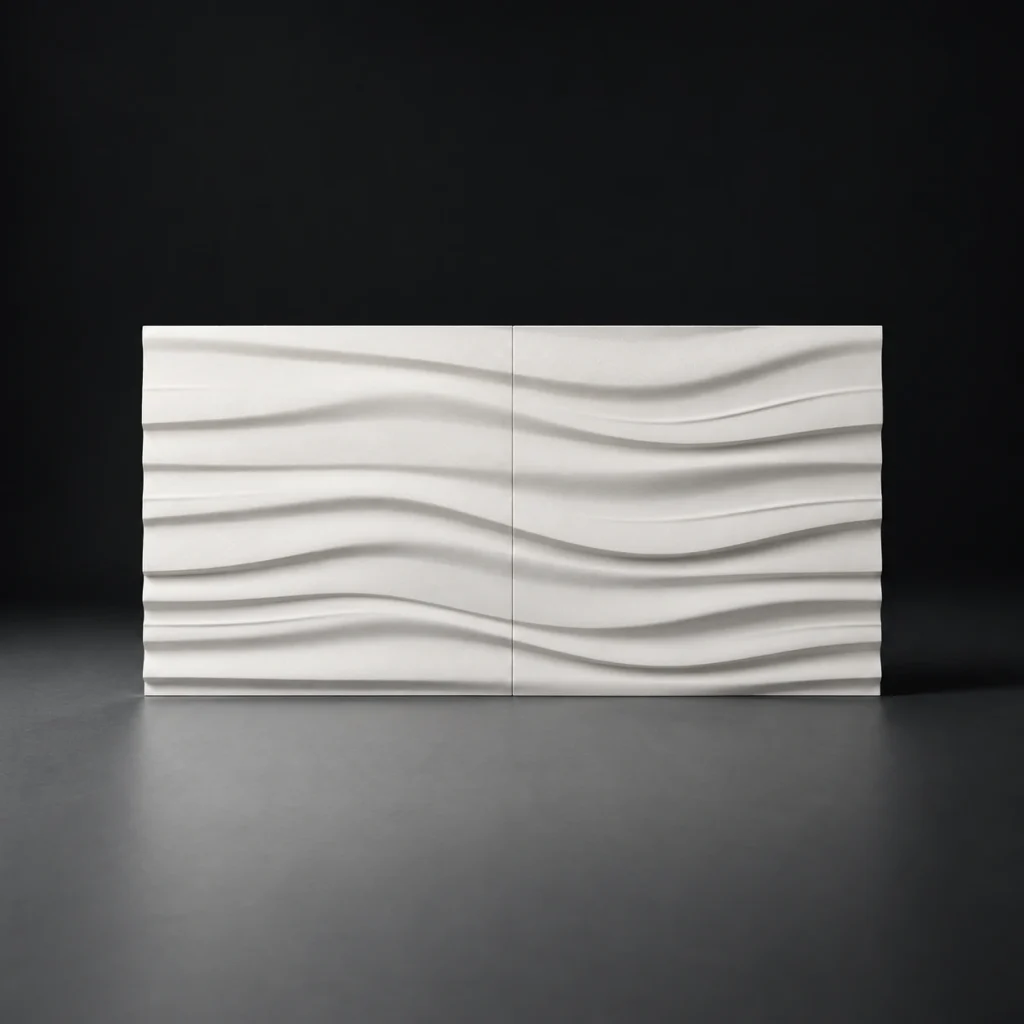
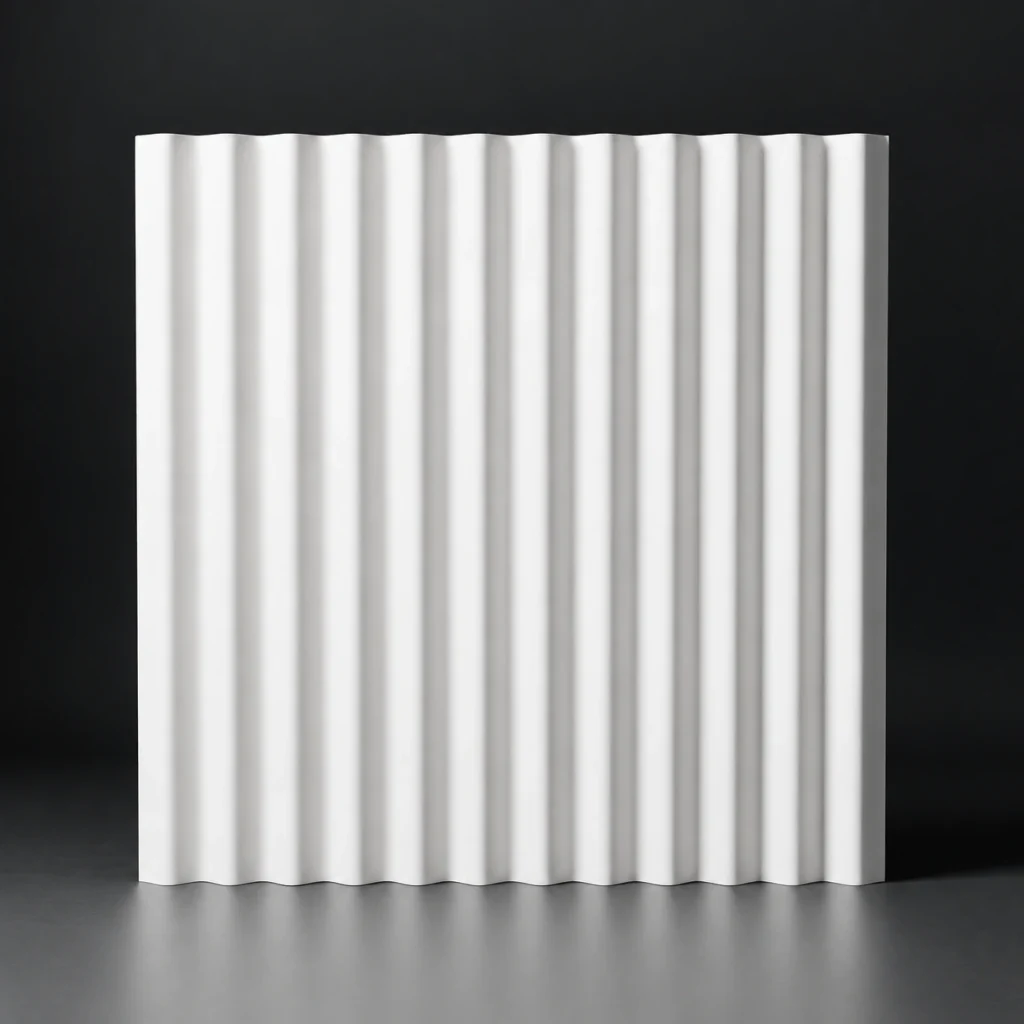
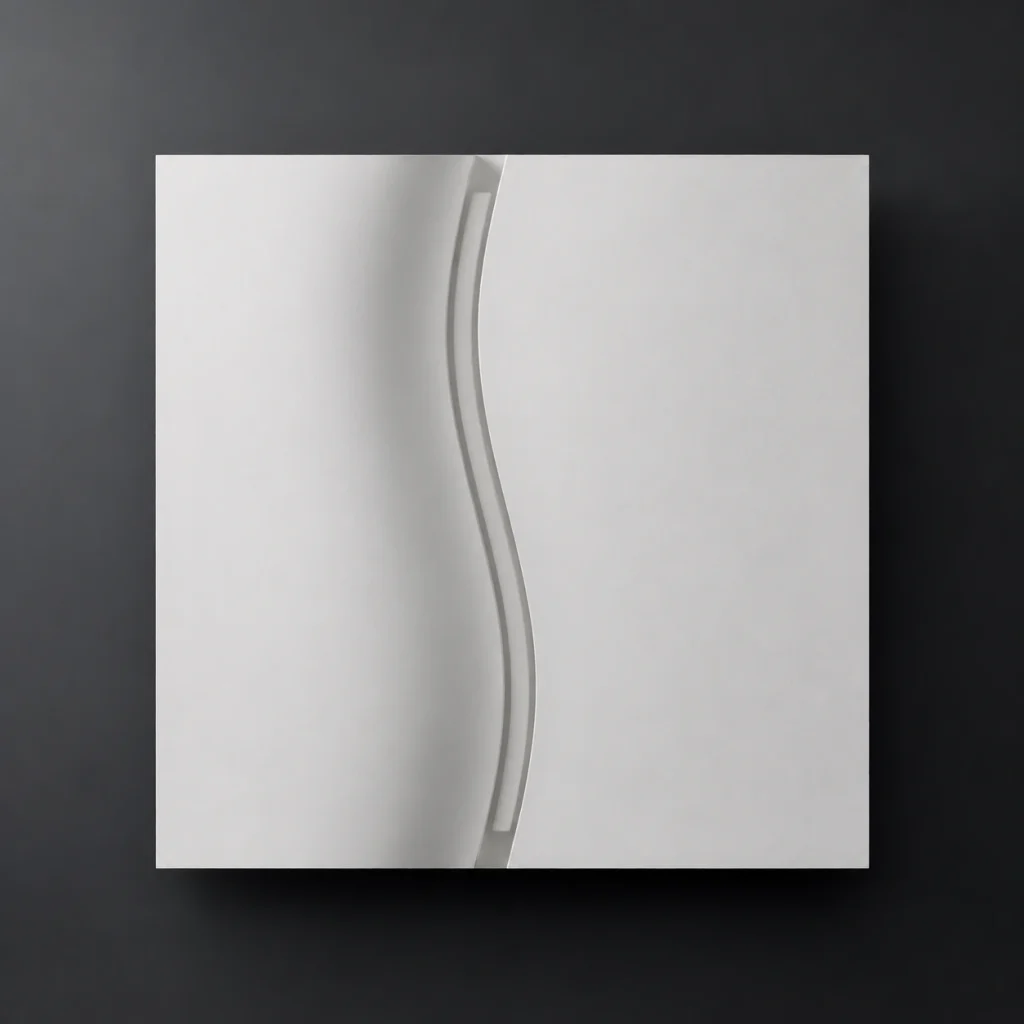
All NALVEM decorative 3D panels for interior walls share the same format and material, but the pattern changes the result a great deal. We group them into four families. You can see every design in the full catalogue.
Geometric
Facets, squares, prisms and hollows. They work well in rooms with straight lines and when you want an ordered texture. Some examples:
- TESSA: 100 squares of 50 mm, a fine grid best appreciated up close.
- DYAREN: four faceted diamonds, with a bolder relief.
- OCULA: 81 circular hollows that create a rhythm of shadow points.
See all geometric panels.
Waves and folds
Curved surfaces that spread light in soft gradients. They are a good choice for bedrooms, relaxation areas or long walls where you want movement without hard edges.
- FLUVA: horizontal bands of varying width.
- ONDEA: horizontal waves with two modules, A and B, which alternate.
See all wave and fold designs.
Linear
Vertical folds and waves that elongate the wall and add a sense of height. They suit entrance halls, corridors and headboard walls.
See all linear panels.
With LED light
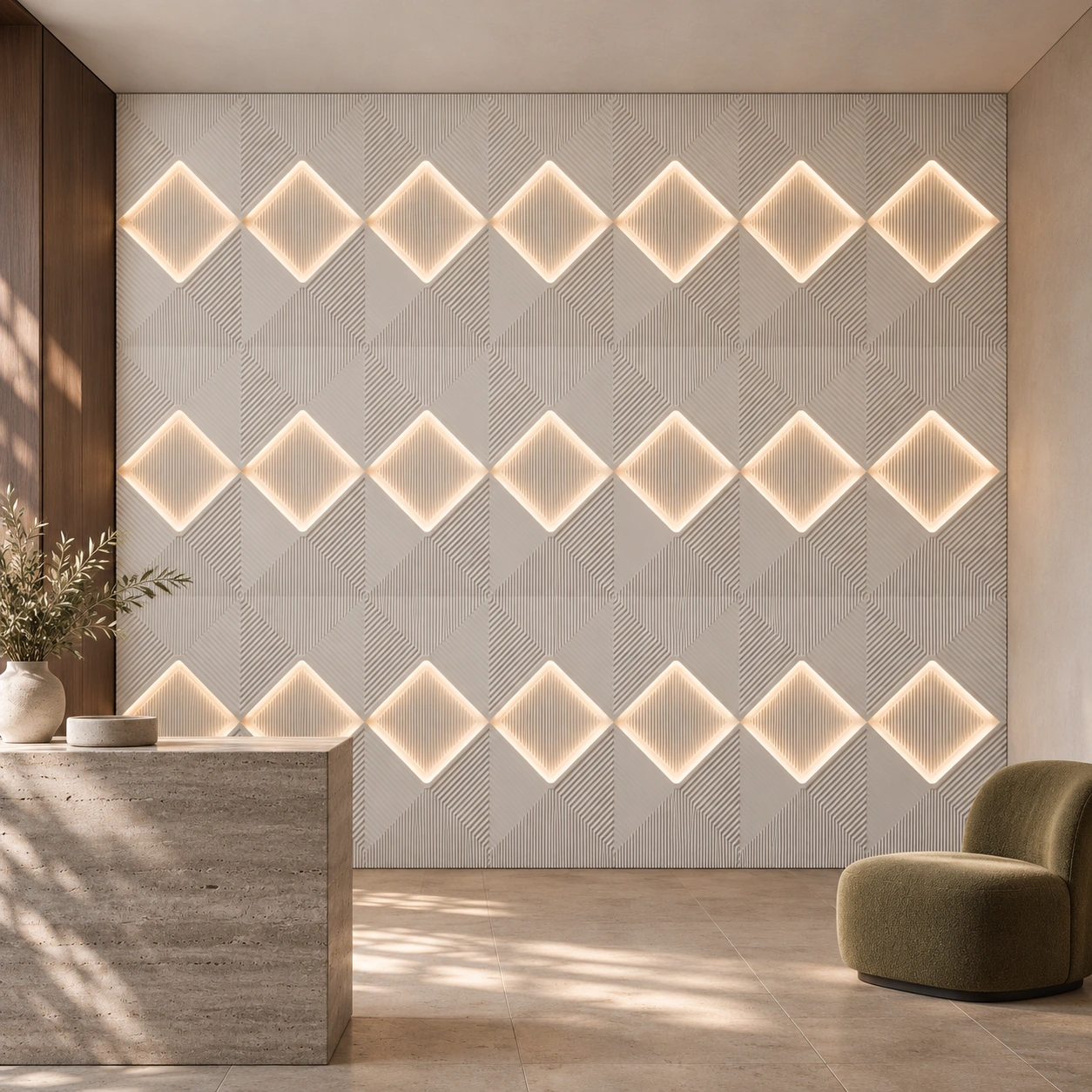
Some designs include a housing for an LED profile. There are two systems: indirect light, with the profile hidden beneath a plaster edge or lip, and exposed linear light, with the profile in an open groove.
- KYREVA: flutes and a V fold with indirect light.
- LYREN: battens and vertical lines of exposed light.
These panels are planned with a silicone LED profile with integrated 24 V light and a 24 V power supply, with components to be confirmed; the power supply is connected to the mains by a qualified, authorised electrician. See the LED panels category and the guide 3D wall panels with LED lights.
Where they can go
NALVEM panels are an interior wall covering for dry environments. Within that use, they work in homes as well as in hospitality and retail projects.
Living room, bedroom and hallway
At home, the usual approach is to clad a whole wall that is already the focal point: the wall behind the sofa, the TV wall or the wall behind the bed. In a hallway or corridor, a linear design helps to lead the eye along the space. A practical tip: clad the whole wall, from corner to corner or up to a clear architectural boundary such as a pillar or a change of plane. An isolated rectangle in the middle of a wall usually looks like an add-on.
Hotels, restaurants and shops
In receptions, dining rooms, bars, fitting rooms or waiting areas, a 3D wall covering creates a feature wall that people remember and that photographs well. In these projects the regulations that apply to the premises come first: the reaction to fire class required depends on the use and the area, and the project designer sets it. For that assessment you have the general technical data sheet; further down we explain where reaction to fire stands.
Where not: outdoors, bathrooms and damp areas
Although people search for ‘decorative 3D panels for exterior walls’, plaster panels are not for outdoor use. Do not use NALVEM panels in:
- Exteriors, façades, terraces or porches.
- Bathrooms, showers and areas exposed to direct water.
- Rooms with constant humidity.
Nor do they have a structural function: shelves, furniture and other items must not be hung from the panel. If you need a shelf unit or a wall light, it must stand on the floor or be fixed to an independent support.
How to choose the design according to light and viewing distance
With a white, matt material, what you see is the shadow. That is why it is worth thinking about three things before choosing a design.
The light the wall receives
- Raking light, coming in from the side through a nearby window or from spotlights close to the wall: it brings out the relief strongly. Soft reliefs, such as waves and curves, read very well under it.
- Frontal or diffuse light, coming from straight ahead or from an evenly lit ceiling: it flattens the pattern. Designs with sharper edges and deeper relief, such as faceted geometric ones, work better there.
- No natural light: you can solve it with side lighting or with an LED panel.
The distance it is seen from
- Up close (corridor, headboard wall, reading corner): fine, repetitive grids such as TESSA or OCULA add texture without overwhelming.
- At medium distance (living room, dining room): medium-scale designs, waves or folds.
- From afar (reception, large premises): large motifs and bold relief that still read from several metres away.
The character of the space
Vertical lines make a low ceiling feel taller; horizontal bands lengthen a short wall; curves soften a space full of hard lines. As the piece is painted on site, colour is no limitation: you can blend it into the tone of the wall or make it contrast.
Installation and painting in brief
These are NALVEM’s general recommendations. They are not tested requirements but good site practice:
- Acclimatise the pieces for 24 hours in the room, inside their packaging.
- Check that the substrate is sound, flat, dry and clean.
- Set out from a level line, following the orientation or rotations given on the design’s data sheet.
- Bond with a gypsum- or plaster-based adhesive. If the substrate does not guarantee adhesion, add supplementary mechanical fixing.
- Cut with a fine-toothed saw, wearing a mask and goggles when cutting or sanding.
- Fill the joints with plaster or fine gypsum filler and sand. The channels, steps and edges that belong to the design are kept.
- Prime the whole surface and paint with an interior paint suitable for plaster.
Drying times are those given by the manufacturer of the adhesive, filler or paint. We recommend that installation is carried out by a professional with experience in plaster, gypsum or tiling. You will find the step-by-step process in the guide How to install 3D plaster wall panels and in the installation guide in PDF.
Reaction to fire: why plaster can be A1
Class A1 is the best reaction to fire class in the European EN 13501-1 system: it covers products that make no contribution to fire. Some materials are recognised as A1 without the need for testing because their composition is mineral.
The formulation is being defined with class A1 as its target; until this is documented, NALVEM does not declare a class for the product. The reference is Commission Decision 96/603/EC (as amended by 2000/605/EC and 2003/424/EC) and Annex I, section 1.2, of Royal Decree 842/2013 (which adopts it into Spanish law), which includes gypsum and gypsum-based plasters with fibres when the organic content is 1.0% or less. It is worth knowing the limits of that classification:
- It applies to the piece without factory-applied organic coatings.
- Primer and paint applied on site are an additional coating, and their behaviour depends on the product used.
- It is neither a test report nor CE marking.
You can read the guide Euroclass A1: what it means. The class required in each building is determined by the project designer.
How much 3D plaster wall panels cost
NALVEM’s standard panels have a planned guide price of €112/m², including Irish VAT, about €27.95 per panel. The price follows the VAT rate of each EU country: use the country selector on the website to see it for other EU countries; outside the EU, price on request. LED panels, planned with an LED profile and 24 V power supply, are priced on request.
With the earlier example, a 4 × 2.5 m wall: 10 m², 40 panels, or 44 with a 10% allowance for waste. The material starts at €1,229.80.
That amount covers the material only. The following are quoted separately:
- Installation.
- Adhesive, filler and paint.
- The electrical installation, for LED panels.
- Transport.
To do your own sums with other measurements, see the guide 3D wall panels: cost per m² and how many you need.
Frequently asked questions
Can 3D plaster wall panels be used outdoors?
No. NALVEM panels are an interior wall covering for dry environments. They are not suitable for façades, terraces or porches, nor for bathrooms, showers or areas with direct water or constant humidity. If you are looking for a relief covering for outdoor use, you need a different type of product designed and documented for that purpose.
Can they be painted?
Yes, and that is the intention. They will be supplied in matt white, with a fine mineral texture, ready to prime and paint on site in any colour. Once the joints have been filled and sanded, prime the whole surface and apply an interior paint suitable for plaster. Follow the drying times given by the manufacturer of each product.
How much does a panel weigh?
Roughly between 4 and 6 kg per 50 × 50 cm piece, depending on the design. It is a calculated reference weight, not a measured one. Designs with more relief are at the top of the range. Bear this figure in mind when checking the substrate: it must be sound, flat, dry and clean, with supplementary mechanical fixing if it does not guarantee adhesion.
Are the joints visible?
The joints between panels are filled with plaster or fine gypsum filler and sanded before priming and painting. Done properly, the wall reads as one continuous surface. What is kept are the channels, steps and edges that are part of the design: they are not joints and must not be filled.
Are plaster and gypsum the same thing?
They are the same family. Gypsum is the mineral, and fine casting plaster is its finest, purest grade, which is why it reproduces edges and fine textures so well. In the UK and Ireland people usually say ‘plaster’, while ‘gypsum’ appears in many international listings, so you will see both names. NALVEM panels are made of fibre-reinforced plaster.
Can things be hung from the panel?
No. The panel has no structural function. Do not hang shelves, furniture, televisions or other items from it. If you want a shelf unit, a wall light or a piece of furniture on that wall, it must stand on the floor or be fixed to a support independent of the wall covering, planned before or during installation.
Can I install them myself?
We recommend that installation is carried out by a professional with experience in plaster, gypsum or tiling. Setting out, bonding and filling the joints determine the final result. If you have experience with these materials, the installation guide explains the process step by step. Wear a mask and goggles when cutting or sanding.
Next step
If you already have a wall in mind, start with the catalogue and pick two or three designs. On each design’s page you can join the sample waiting list with ‘Request a sample’ or send your enquiry with the measurements of the wall. You can also write to us through the enquiry form. If you want to keep reading, the next guide compares plaster, PVC and 3D tiles, and the guides index lists all the others.
More guides
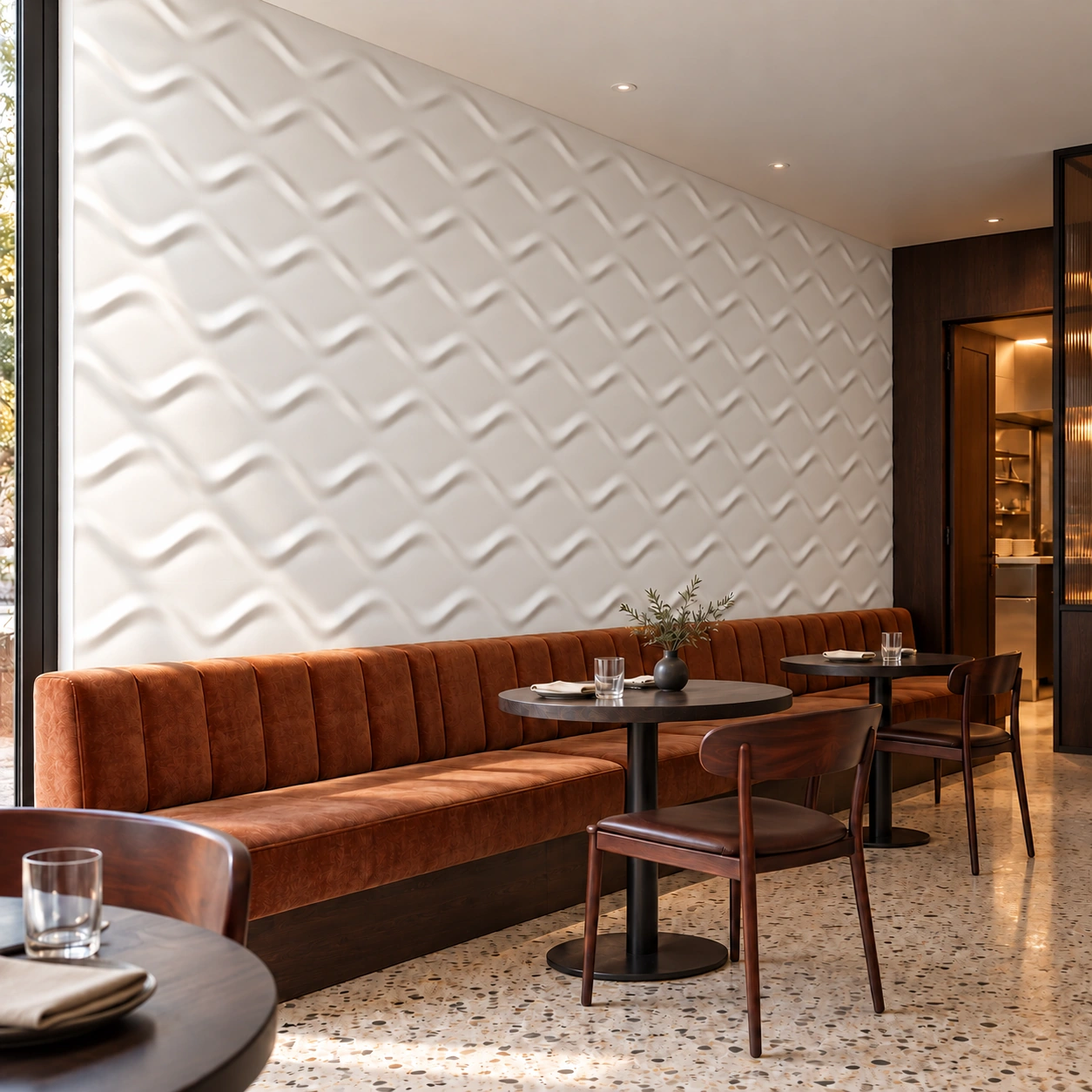 PVC vs plaster wall panels, foam or 3D tiles: the real differences and which to choosePVC vs plaster wall panels, polyurethane foam, MDF or 3D tiles: relief, joints, weight, paint, reaction to fire and which suits a rental, home or business.Read the guide →
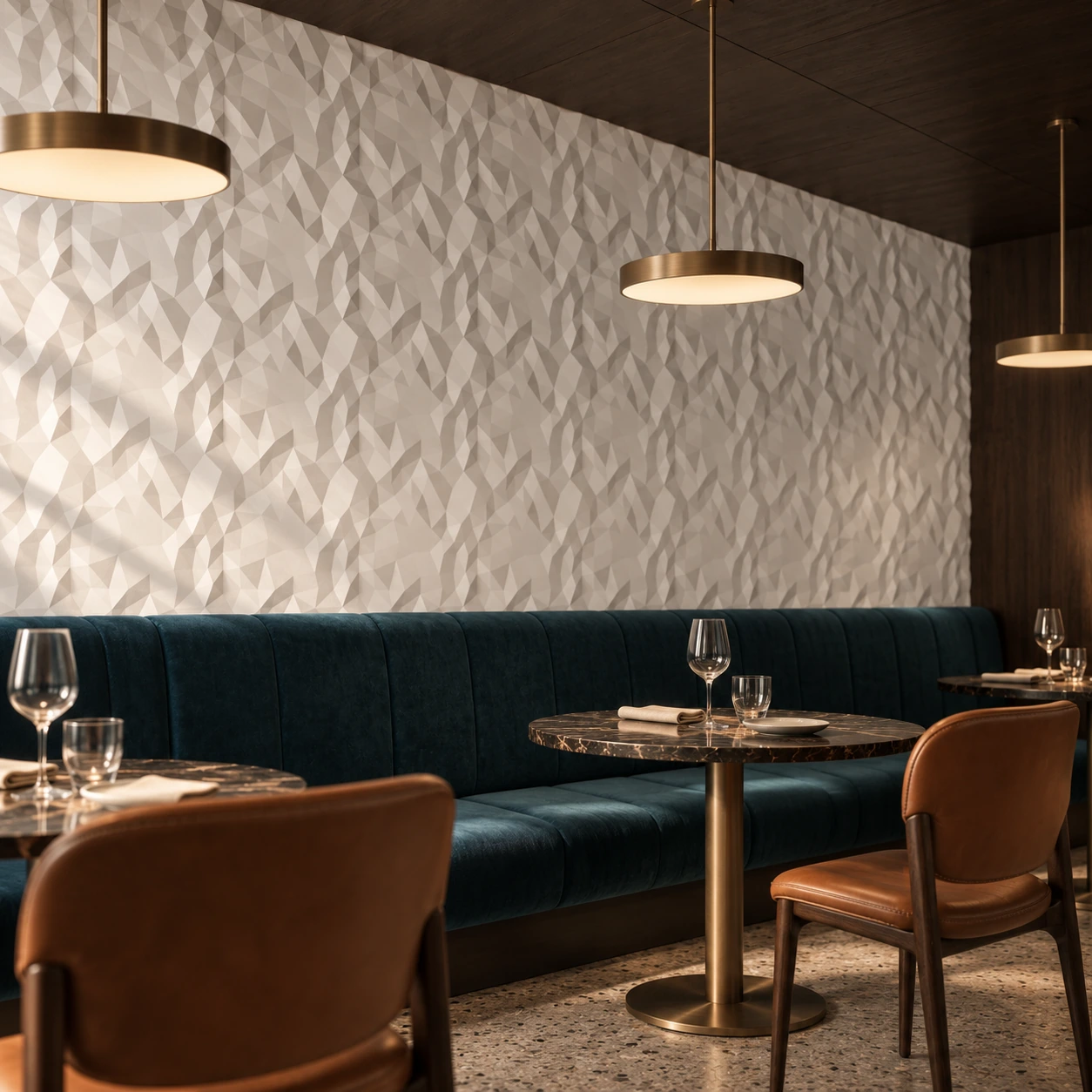 How to install 3D wall panels in plaster: substrate, adhesive, joints and paintHow to install 3D plaster wall panels: suitable substrates, gypsum-based adhesive, setting out, cutting, filling joints, priming and painting, step by step.Read the guide →
 Euroclass A1 reaction to fire: what it means and which decorative panels achieve itEuroclass A1 explained: the EN 13501-1 classes, s and d indicators, A1 vs A2, classification without testing, how paint affects it and what to ask for.Read the guide →